

There is a point in every journey where planning ends and reality begins
For many years, we have explored Southern Africa, sometimes by 4×4 overlanding but predominantly by adventure enduro motorcycles. That adventurous spirit eventually gave birth to Wild & Moto Media, a platform through which we share our journeys in various forms of overlanding, discover remarkable places, and occasionally capture the stories and images of adventure events through the lens of photography.
Yet, some journeys remain unfinished chapters for us; Kaokoland, Van Zyl’s Pass and the Marienfluss had long occupied that space. It was a challenge we had spoken about for years, one that slowly evolved from a dream into a plan. More importantly, it represented the closing of a chapter we had hoped to complete together.
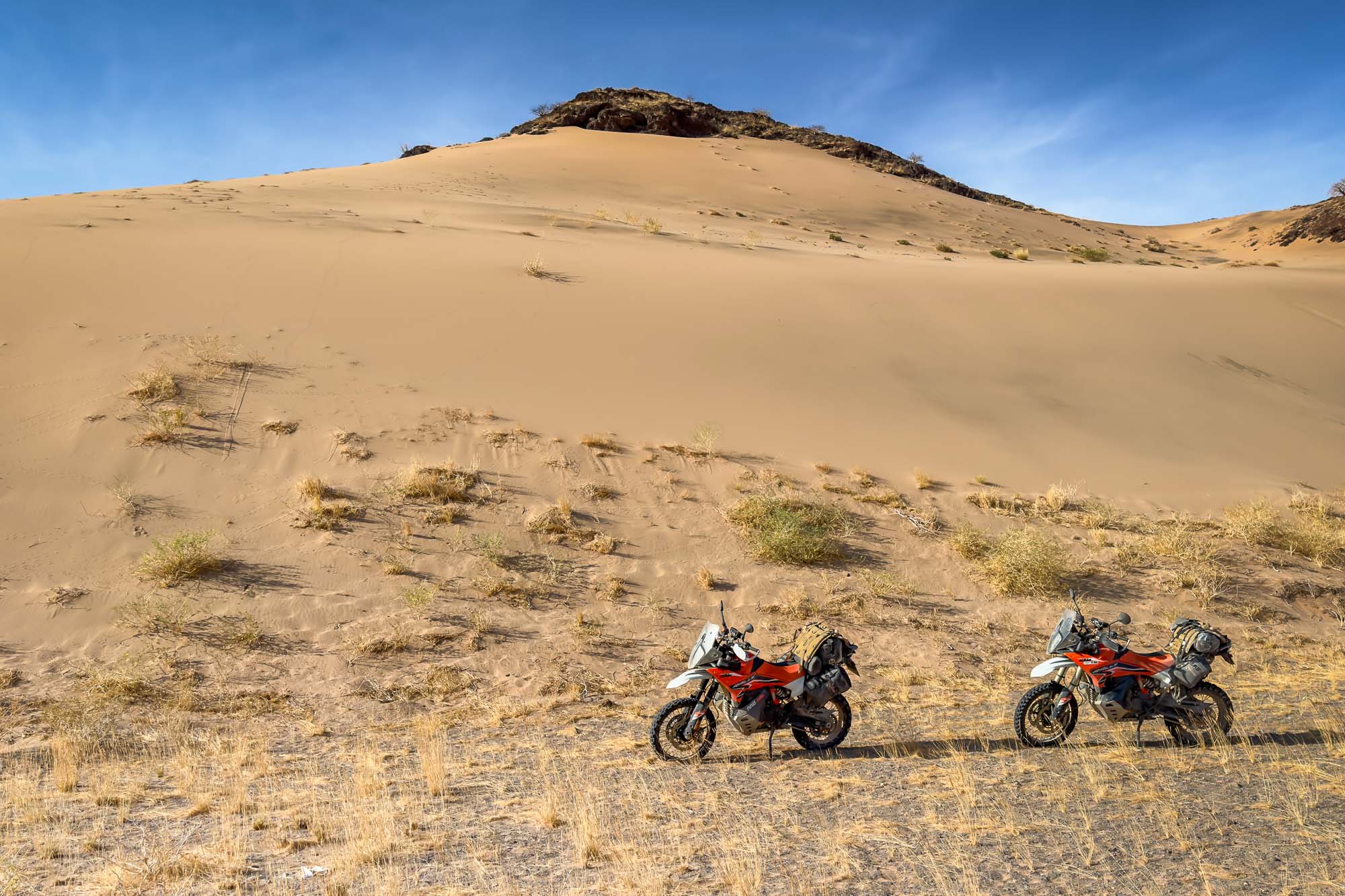
As we left Johannesburg and pointed our vehicle northwest towards Botswana and Namibia, the planning gave way to reality. Fourteen days, thousands of kilometres and countless memories later, we would return with a deeper appreciation for the landscapes of Kaokoland, a healthy respect for Van Zyl’s Pass, and renewed confidence in both our machines and the equipment that carried our lives across some of Southern Africa’s most demanding terrain.
What followed was more than a New Year’s trip; it became the culmination of years of dreaming, planning and exploring — and ultimately a journey that reminded us why we ride in the first place.
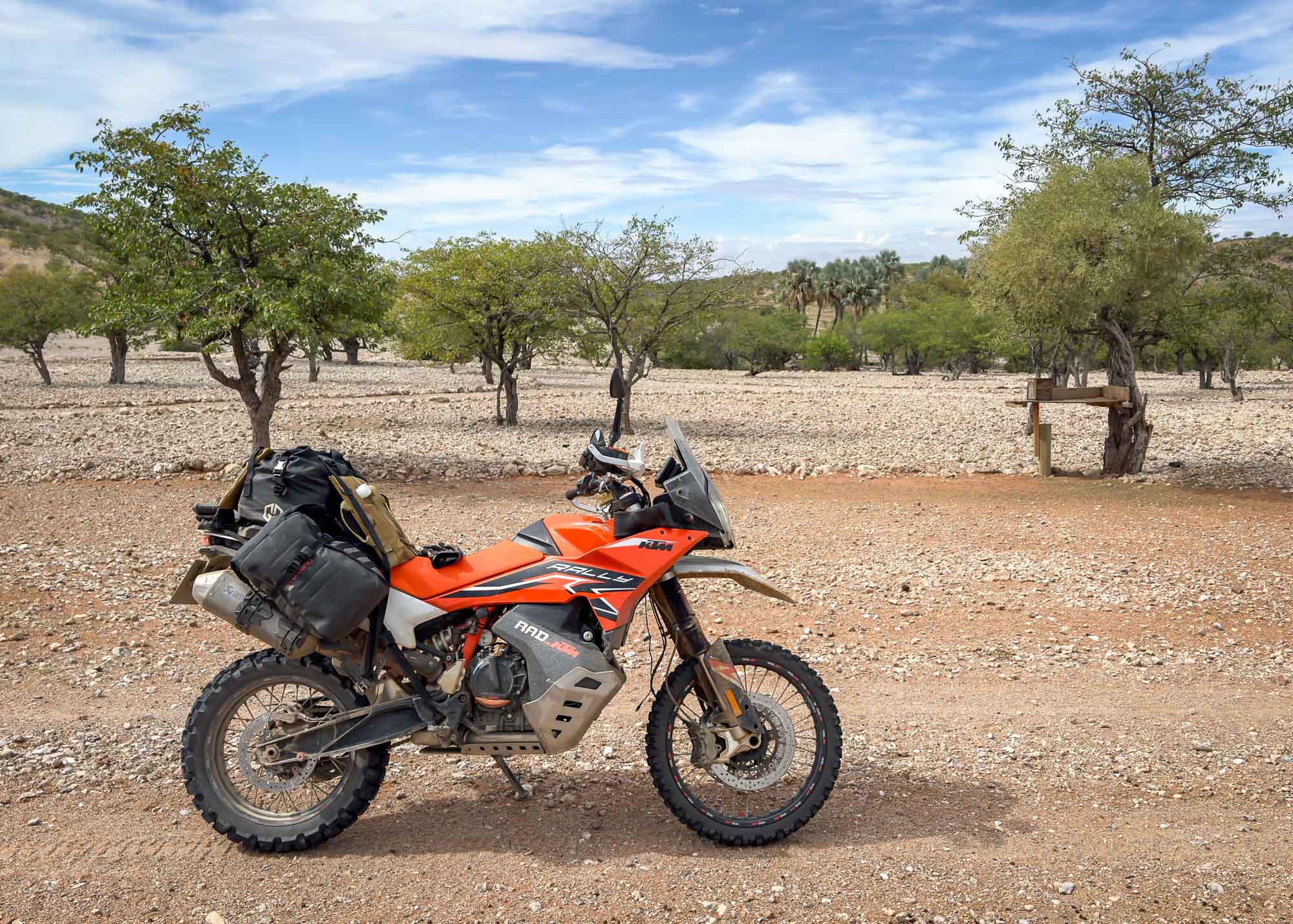
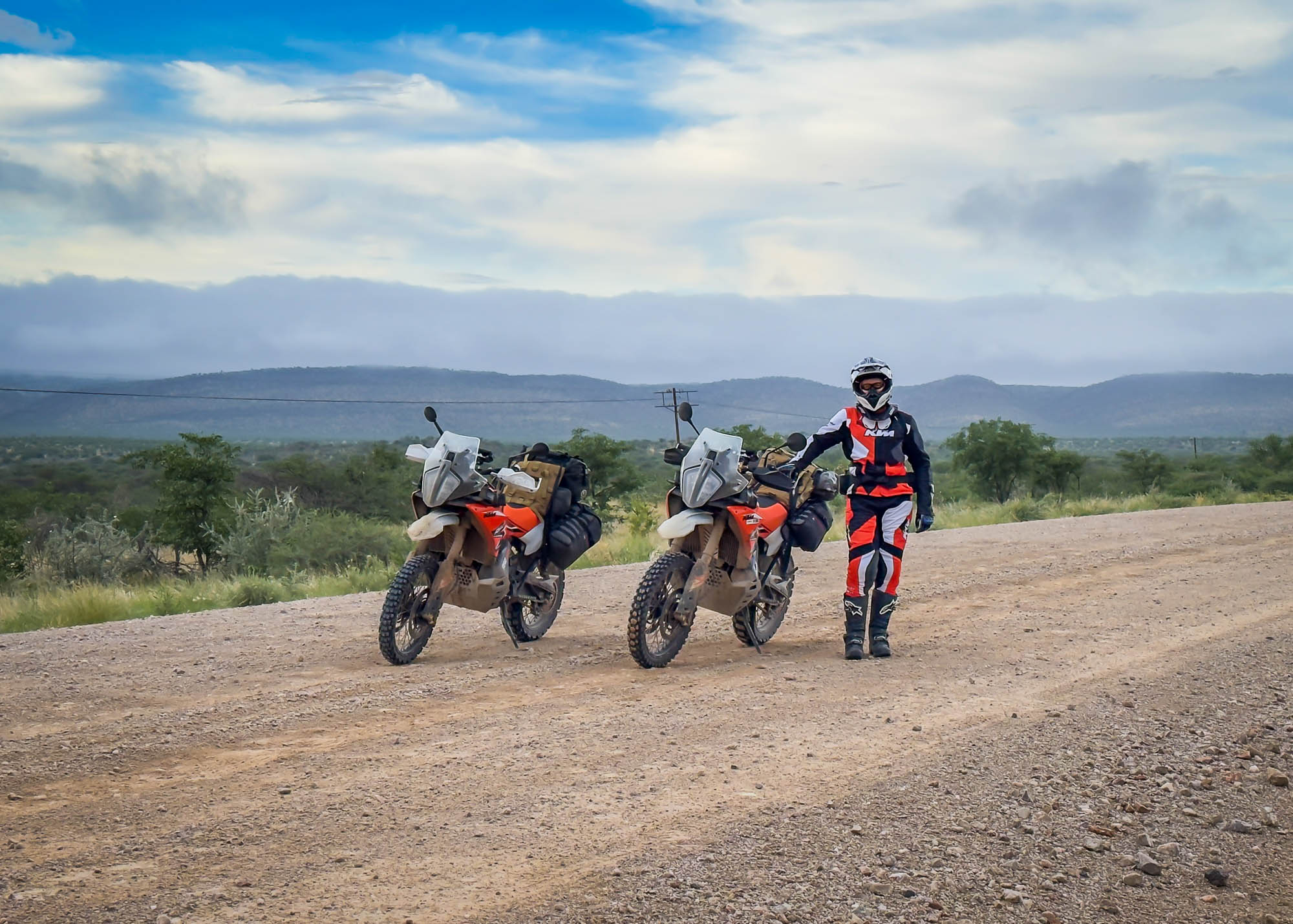
Day 1 – Heading West
The wait was finally over; months of planning, route discussions, maps, and dreams gave way to an early departure from Johannesburg. Kang, Botswana, would be our first overnight stop on the road to Windhoek and eventually Kaokoland. Border formalities at Skilpadshek proved less painful than expected, although two motorcycles on a trailer caused enough confusion among officials to briefly bring proceedings to a standstill before common sense prevailed and the paperwork was stamped.
Botswana welcomed us with unexpected potholes around Kanye and persistent rain. Beyond that, the roads opened up and the kilometres slipped by easily. By late afternoon we rolled into Kang, where cold beer and a warm meal marked the beginning of the trip. The only thing with more endurance than an adventure rider proved to be the local mosquitoes, which ensured that sleep would remain somewhat elusive.

Day 2 – Chasing Blue Skies
Clouds and rain remained our travelling companions as we continued towards Windhoek. Yet the weather had transformed both Botswana and Namibia. Landscapes normally associated with dust and drought had become green and alive, and neither of us complained about the overcast conditions.
Once in Windhoek, the support vehicle was unloaded, and attention shifted to the bikes. Luggage was secured, final checks completed and anticipation steadily built. The tar roads had done their job; tomorrow the adventure would truly begin.
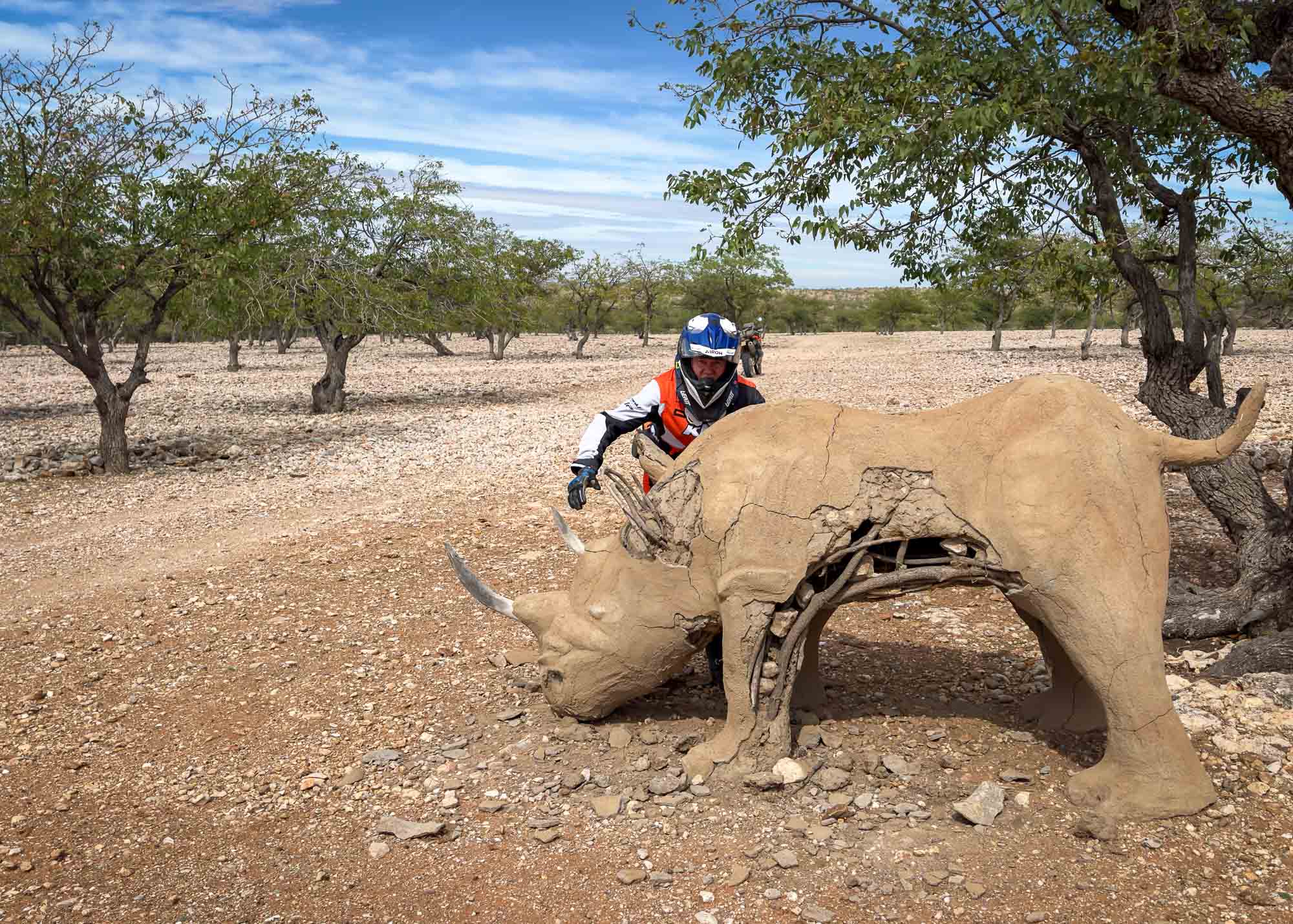
Day 3 – Finding Our Rhythm
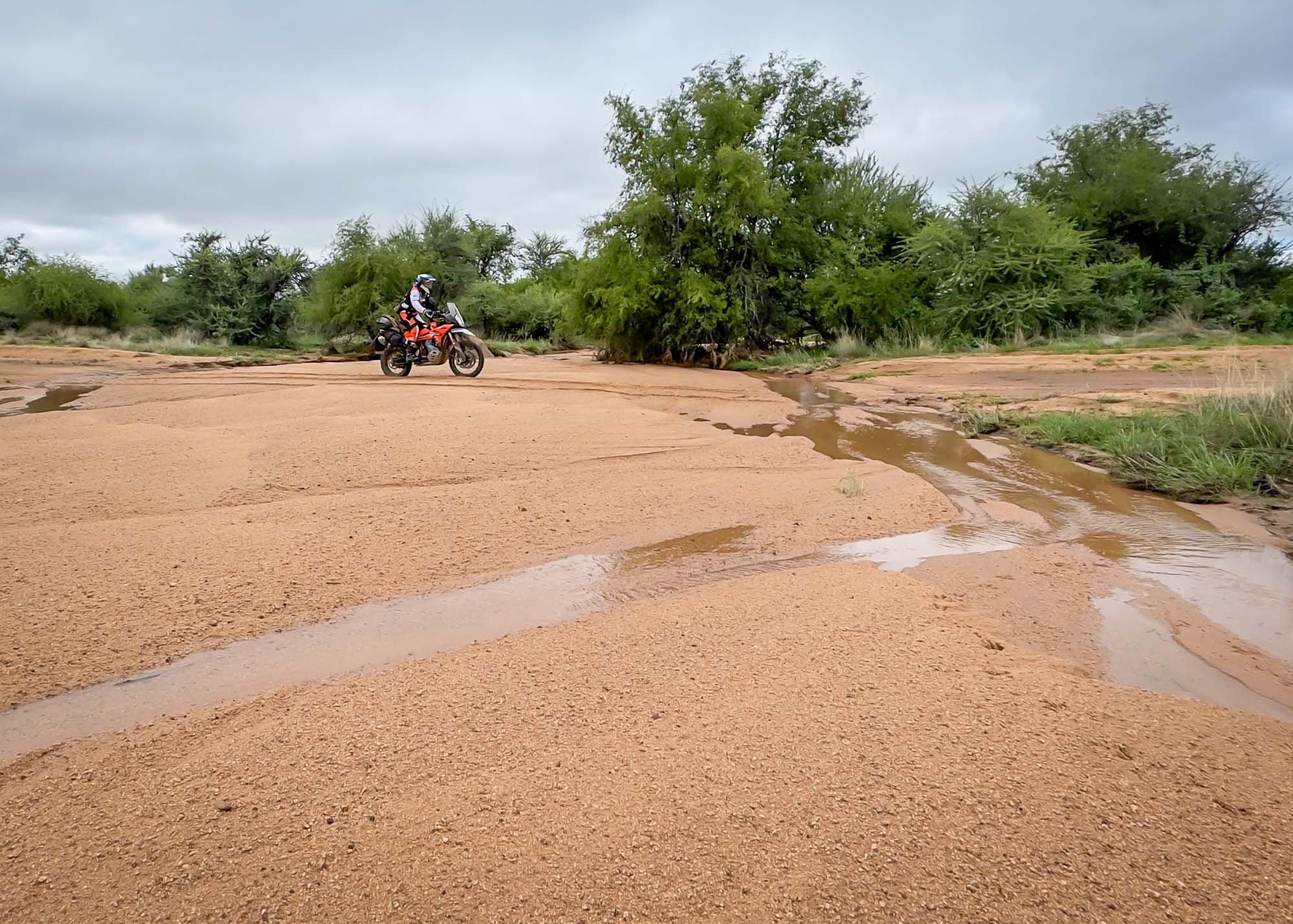
The cool morning air around Windhoek made for a pleasant start, but Namibia quickly reminded us that recent rains had changed the game. Corrugations, mud, standing water and riverbeds showed evidence of flash floods that had swept through only days before.
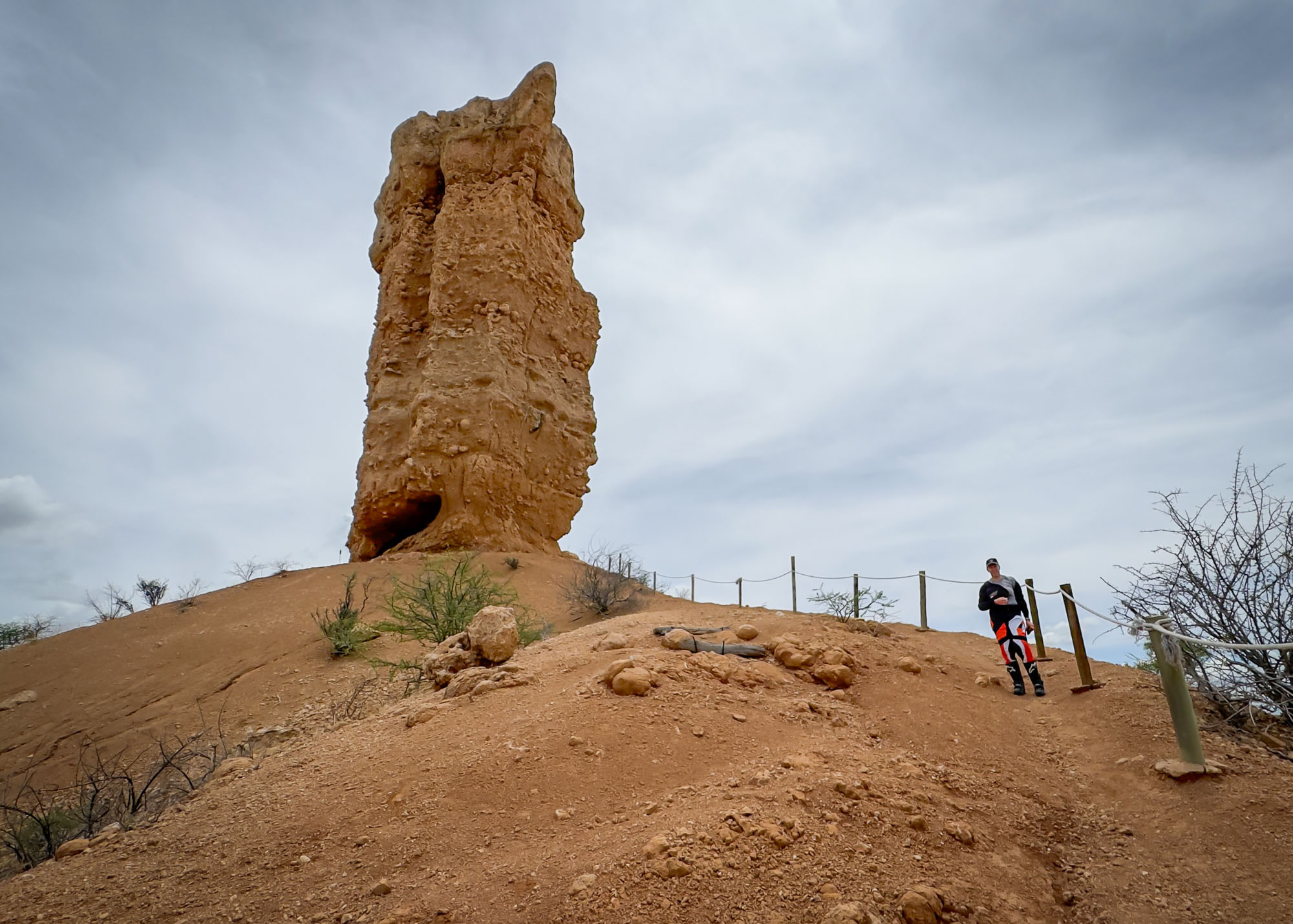
The route towards Omaruru and Vingerklip provided spectacular scenery and abundant wildlife, and somewhere between the river crossings and the rocky two-spoor tracks we began to find our rhythm. There was chaos at first. Riding gear, luggage and gravel all seemed to have their own opinions, but eventually the kilometres started flowing.
By the time we reached Khorixas, temperatures had climbed to 35 degrees, and we realised something important: being fit and being riding fit are two completely different things. Tomorrow, Namibia would raise the stakes.
Day 4 – Welcome to Namibia
Leaving Khorixas, we knew the warm-up was over. The wide gravel roads soon narrowed into two-spoor tracks before eventually introducing us to Elephant Trail, Khowarib and later Klein Serengeti. Over the next 160 kilometres, rocks, sand, riverbeds and fesh-fesh slowly replaced the easy rhythm we had found the previous day.
Temperatures climbed relentlessly, eventually pushing beyond 44 degrees. Progress slowed, and the kilometres became hard-earned. Somewhere along the route, an elephant skeleton lying next to the track served as a reminder that this is a harsh environment where nature sets the rules.
By the time we reached Sesfontein, our fun meters were full. The original camping plans had disappeared long before, and with daylight fading, we found ourselves searching for a place to spend the night.
Eventually, a quiet spot in the bush became home. A small fire, a cup of coffee and the sounds of the African night were all we needed. Unknowingly, the day had prepared us perfectly for what still lay ahead.

Day 5 – Gathering Strength
After the punishment of the previous day, we allowed ourselves a slower start. Twelve hours in the saddle and a night under canvas had taken their toll, and for the first time since leaving Windhoek, there was no urgency.
The ride north towards Ruacana proved to be a welcome change of pace. Mountains and open landscapes accompanied us to Opuwo, where fuel and a quick meal replenished both bikes and riders. From there, the tar road carried us to Ruacana and eventually to Ryacana Campsite, a hidden gem tucked away in the bush overlooking the Kunene River valley.
For the remainder of the afternoon, life slowed down. Mud was washed off the bikes, chains were serviced, clothes were cleaned and luggage was reorganised. The simplicity of camp life returned and, with a pair of well-deserved T-bone steaks on the fire, spirits rose again. But beneath the relaxation, we knew this was more than just another overnight stop, tomorrow, the journey would enter a different chapter.
Epupa Falls, Van Zyl’s Pass and the remoteness of Kaokoland lay ahead. Fuel would become scarce, water precious and distances measured not in kilometres, but in hours. As darkness settled over the valley and the fire burnt low, we checked the bikes one last time and packed with purpose. The next three days would become the heart of the journey.
Day 6 – The Road Nobody Talks About
Leaving Ruacana, we followed the old border road alongside the Kunene River towards Epupa Falls. After the previous day’s rest, both body and mind felt recharged, and the easy pace along the river made it difficult to imagine what lay ahead.
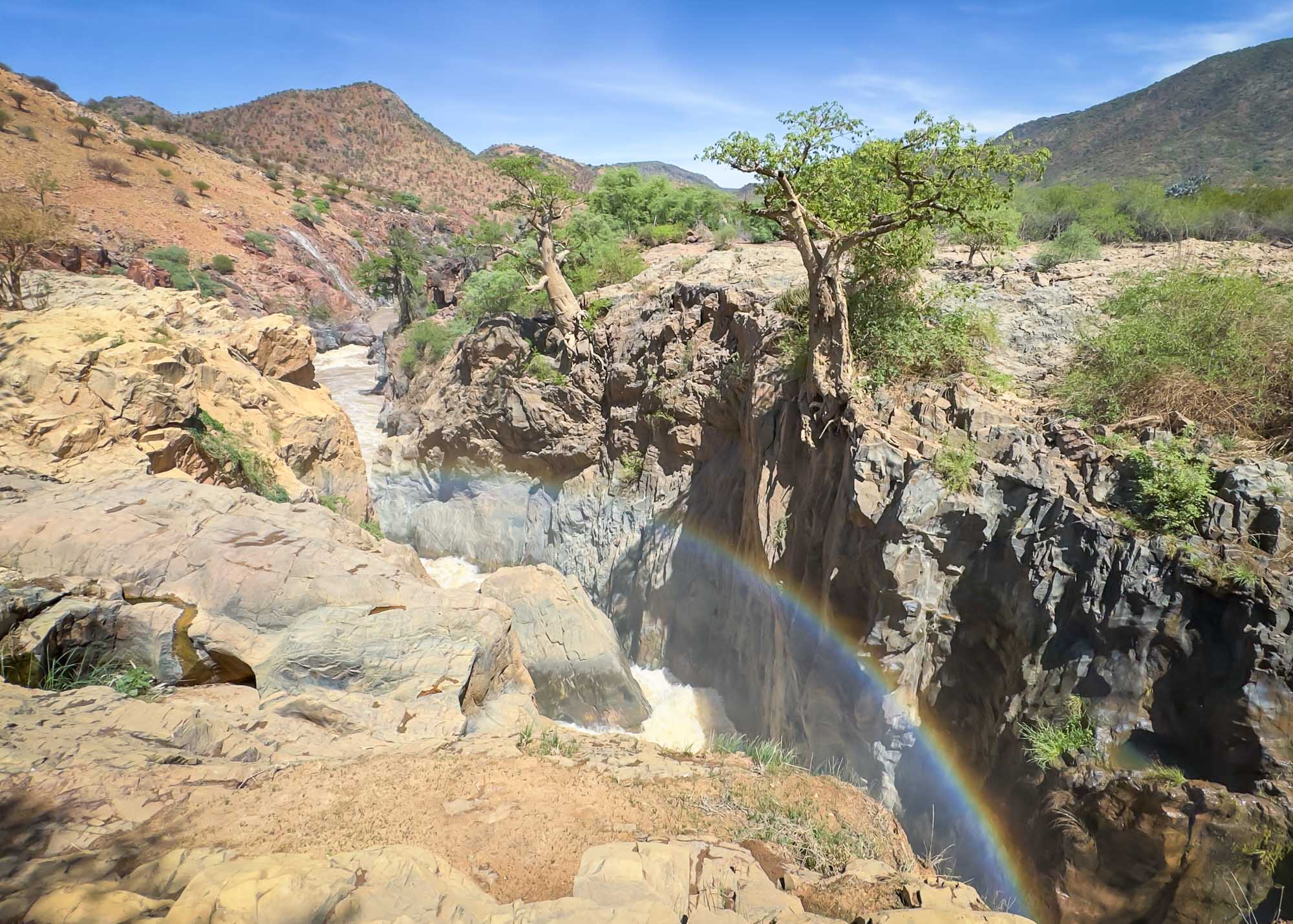
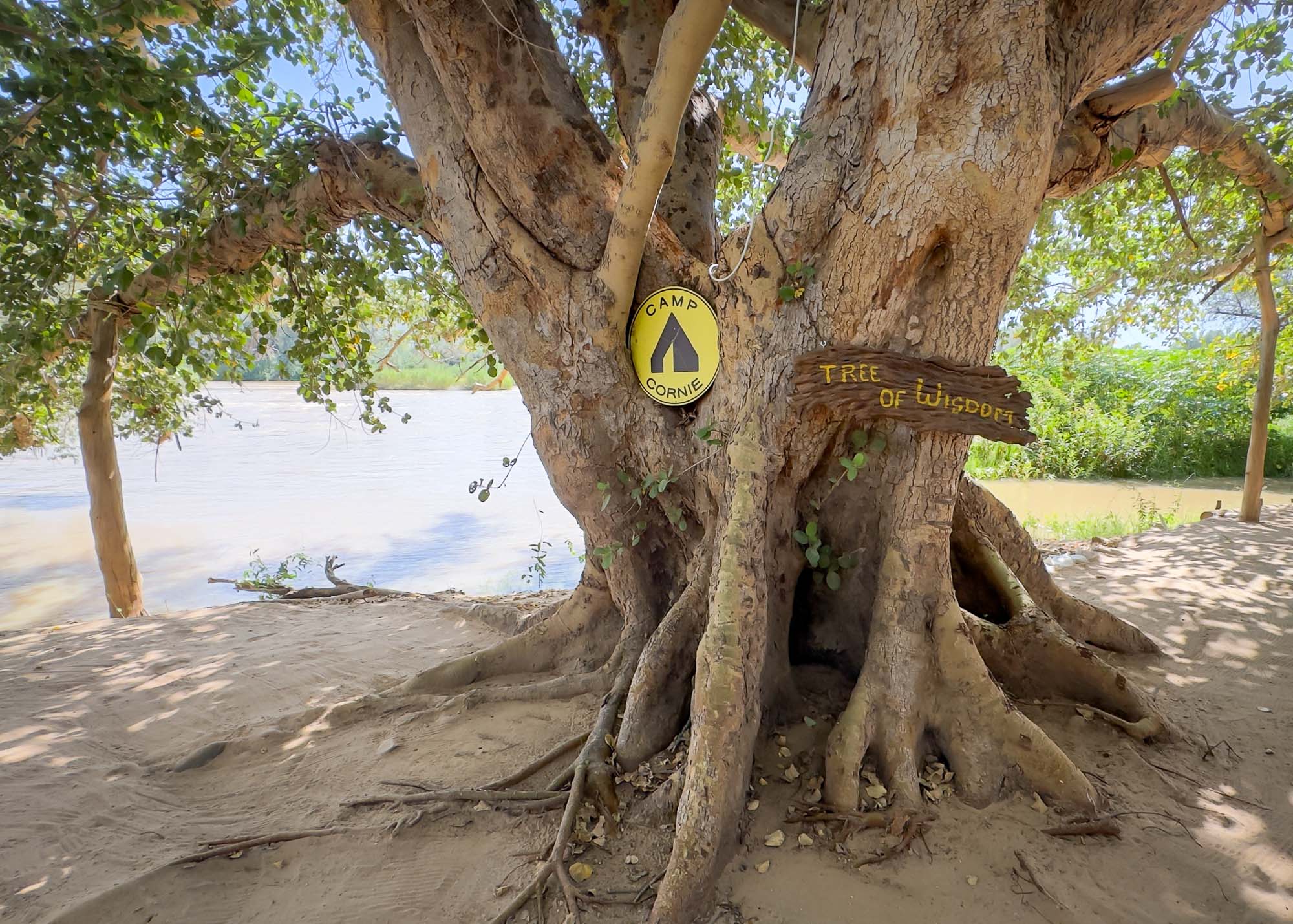
Recent rains had transformed the Kunene into a powerful river. Flood marks stood high in the trees, and the falls themselves thundered through the gorge beneath ancient baobabs. Camp Cornie offered a welcome stop and a cold beer overlooking the river before we continued to Epupa Falls, where swollen waters provided one of the most spectacular sights of the journey.
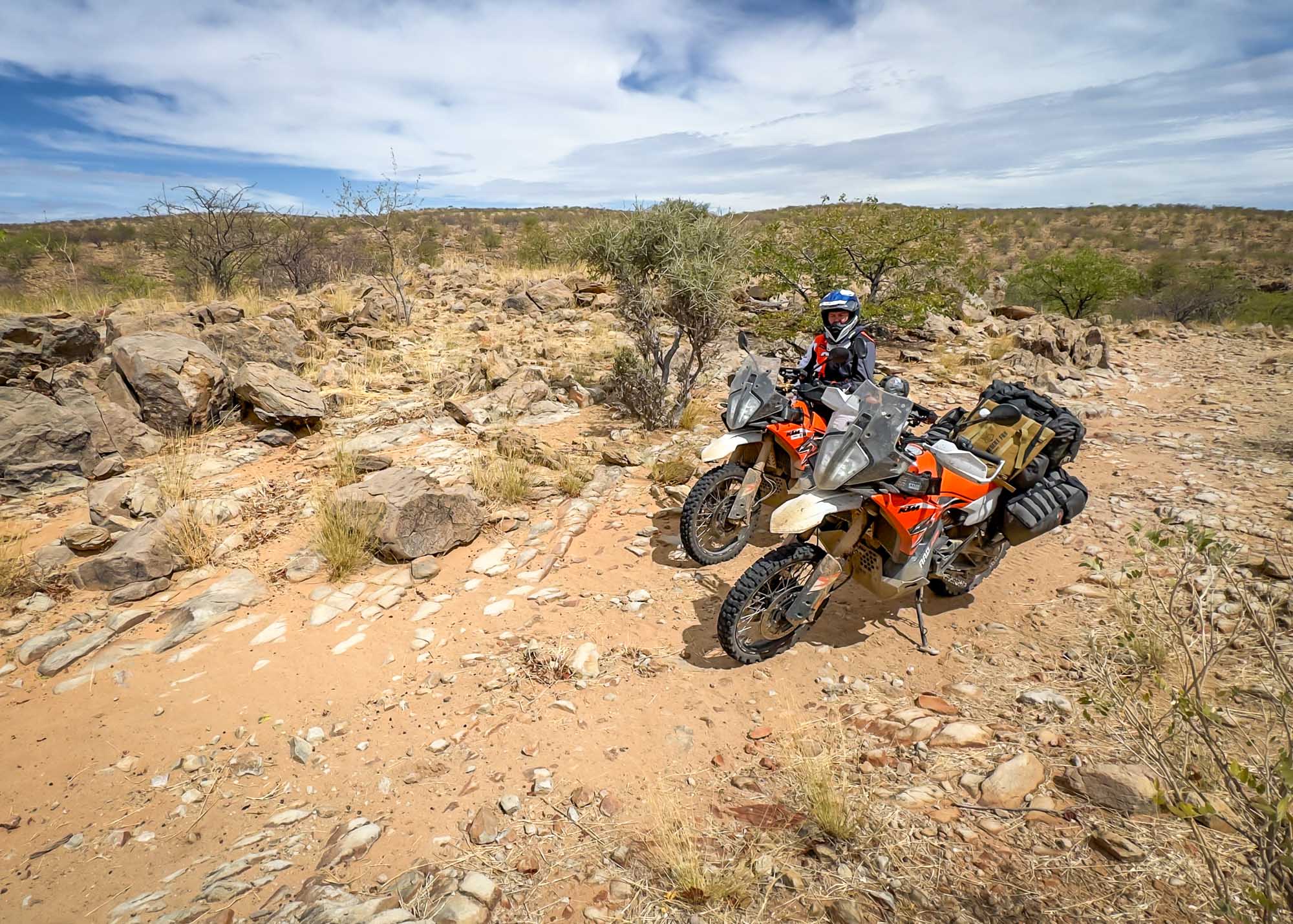
After topping up fuel at Okangwati, we set off towards Van Zyl’s campsite, seventy kilometres away. Seventy kilometres – it sounded simple enough; it wasn’t. The track immediately deteriorated into a mixture of sand, rocks and rough two-spoor. Progress slowed. Temperatures climbed beyond 40 degrees, and the terrain became increasingly hostile. Downhills littered with loose rocks forced us off the bikes and onto our feet. At times it felt as though every kilometre demanded complete concentration.
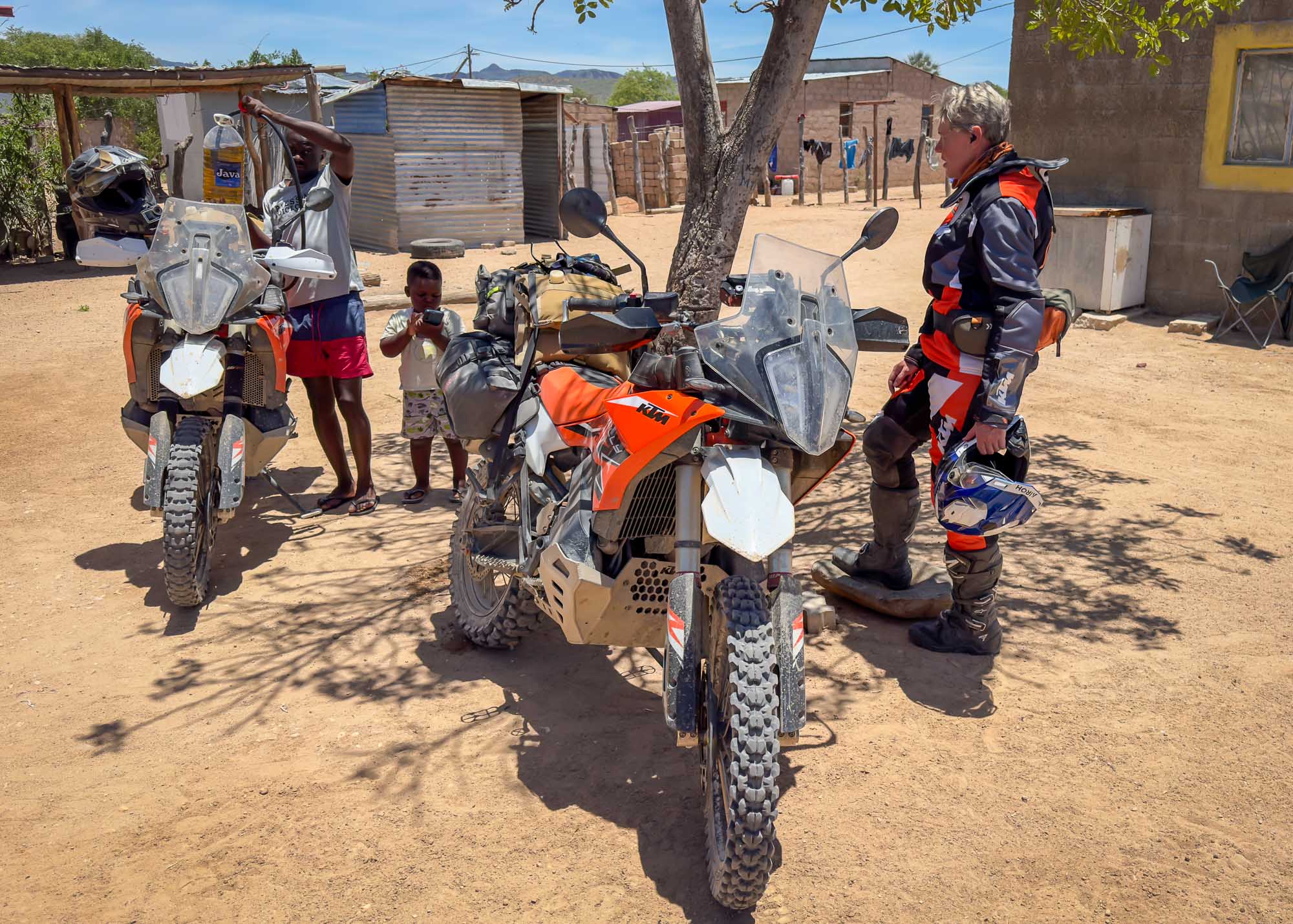
The landscape became wilder, the mountains steeper and the rocks larger. Somewhere along the route, exhaustion slowly replaced excitement. Then came one of the greatest blessings of the entire journey: a cattle borehole. Friendly locals switched on the pump, and we drank deeply, replenishing every bottle and hydration pack we had. At that moment, fresh water was worth far more than fuel.
Eventually, after nearly twelve hours in the saddle, we rolled into Van Zyl’s campsite. Dinner was simple, conversation minimal, and sleep came easily. Tomorrow we would finally meet the pass everyone talks about; little did we know that the hardest work had already begun.
Day 7 – The Heart of Kaokoland
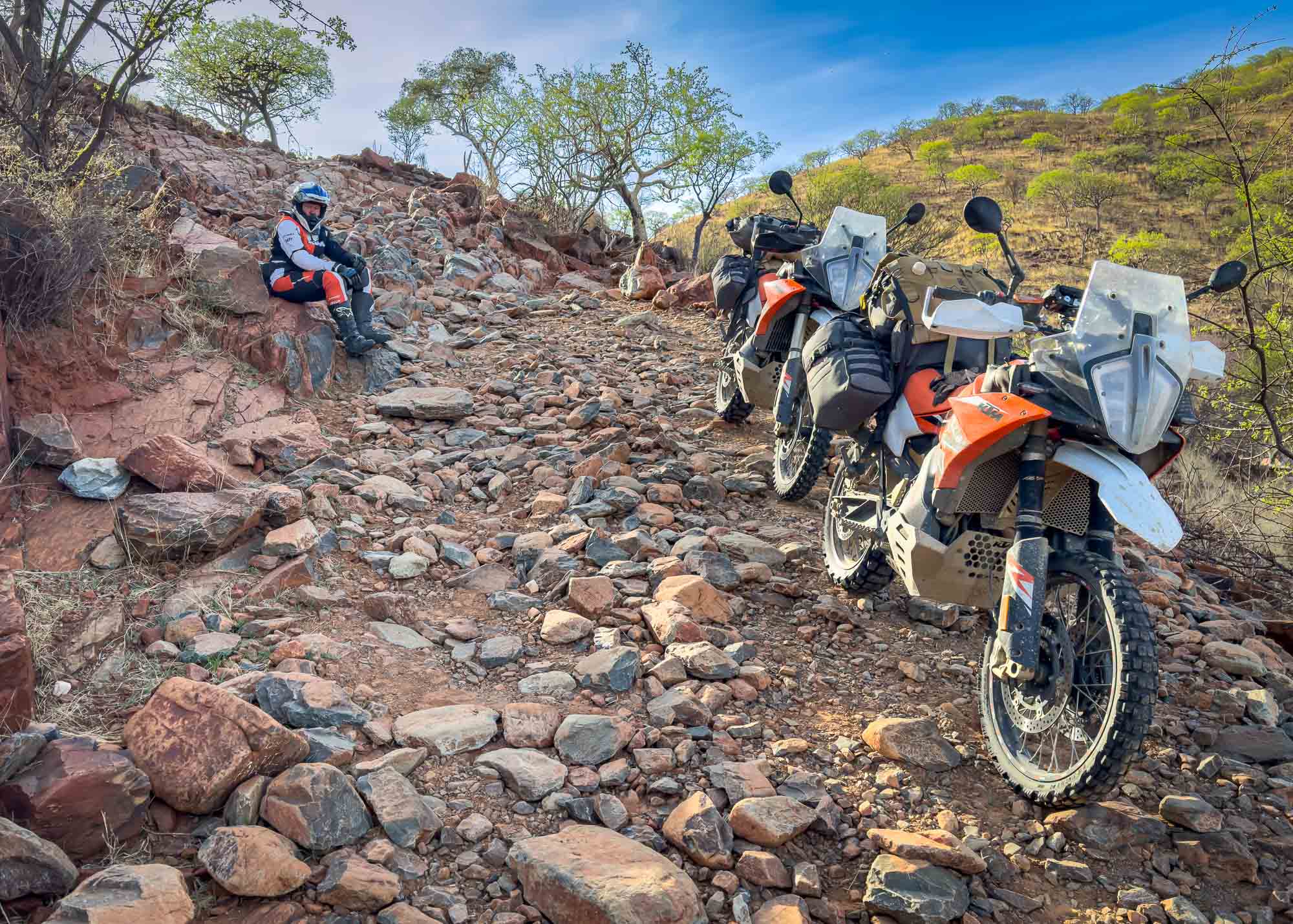
The morning started quietly; a guinea fowl announced the dawn, and the cool air along the river brought welcome relief. Ahead lay twelve kilometres of road that have become legendary amongst overlanders and adventure riders alike. On paper, it didn’t seem intimidating. Reality had other ideas.
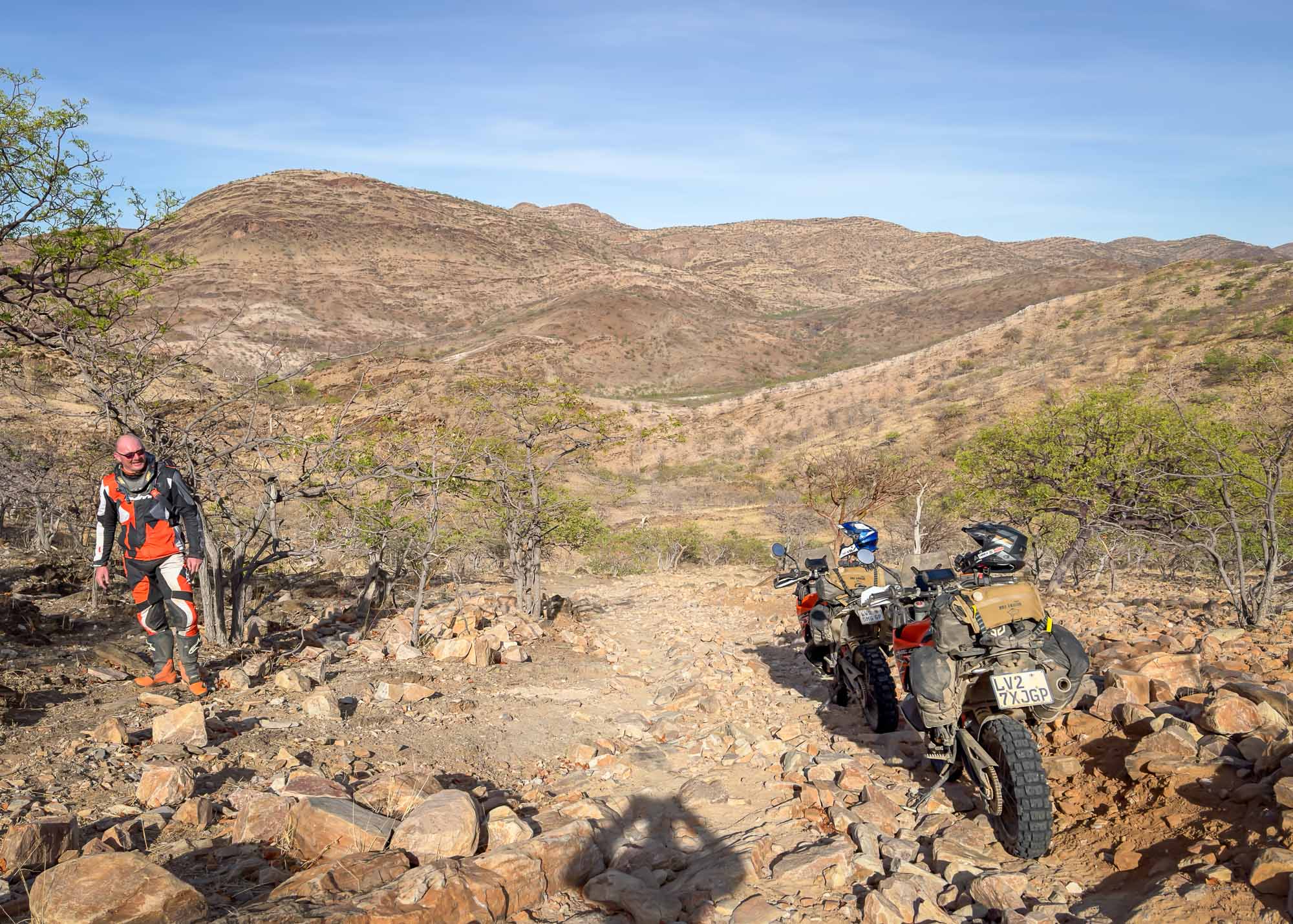
Loose rocks, steep descents and technical sections demanded patience more than bravery. Several times the motorcycles had to be switched off and carefully walked down rocky slopes. Momentum was important, but so was knowing when to stop and help each other.
Ironically, the famous descent seen in countless YouTube videos proved less intimidating than some of the sections leading to it. Slowly, metre by metre, the valley floor came closer, and then, suddenly, it was over. The relief was enormous, but the day was far from done.
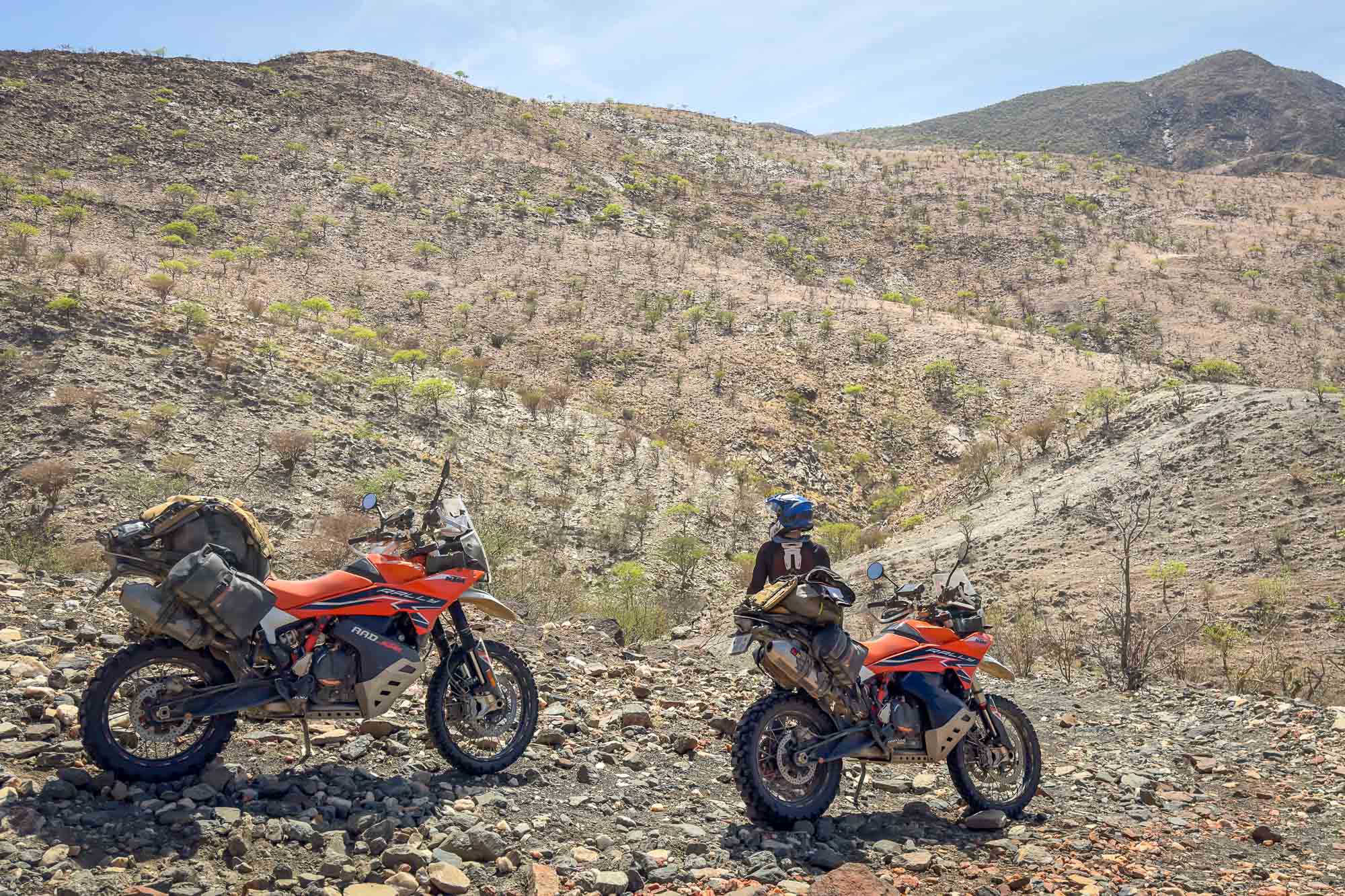
Ahead lay the Marienfluss, stretching into the distance beneath towering mountains. Beautiful, remote and unforgiving, it offered a different kind of challenge. Corrugations, sand and temperatures approaching 46 degrees steadily drained what little energy remained.
Then came Joubert’s Pass. By now, the appetite for rocks had long disappeared, but the mountain had one final lesson to teach. Slowly and carefully we picked our way through the pass before eventually descending into the valley below.
When Marble Camp appeared in the early afternoon, it felt like an oasis. Cold Coke, cold beer, shade and the kindness of strangers, never had simple things felt so luxurious with Van Zyl’s Pass and Joubert’s Pass behind us. And somewhere between the rocks, the heat and the exhaustion, we realised that the reward had never been the pass itself.
It had been the journey to get there.
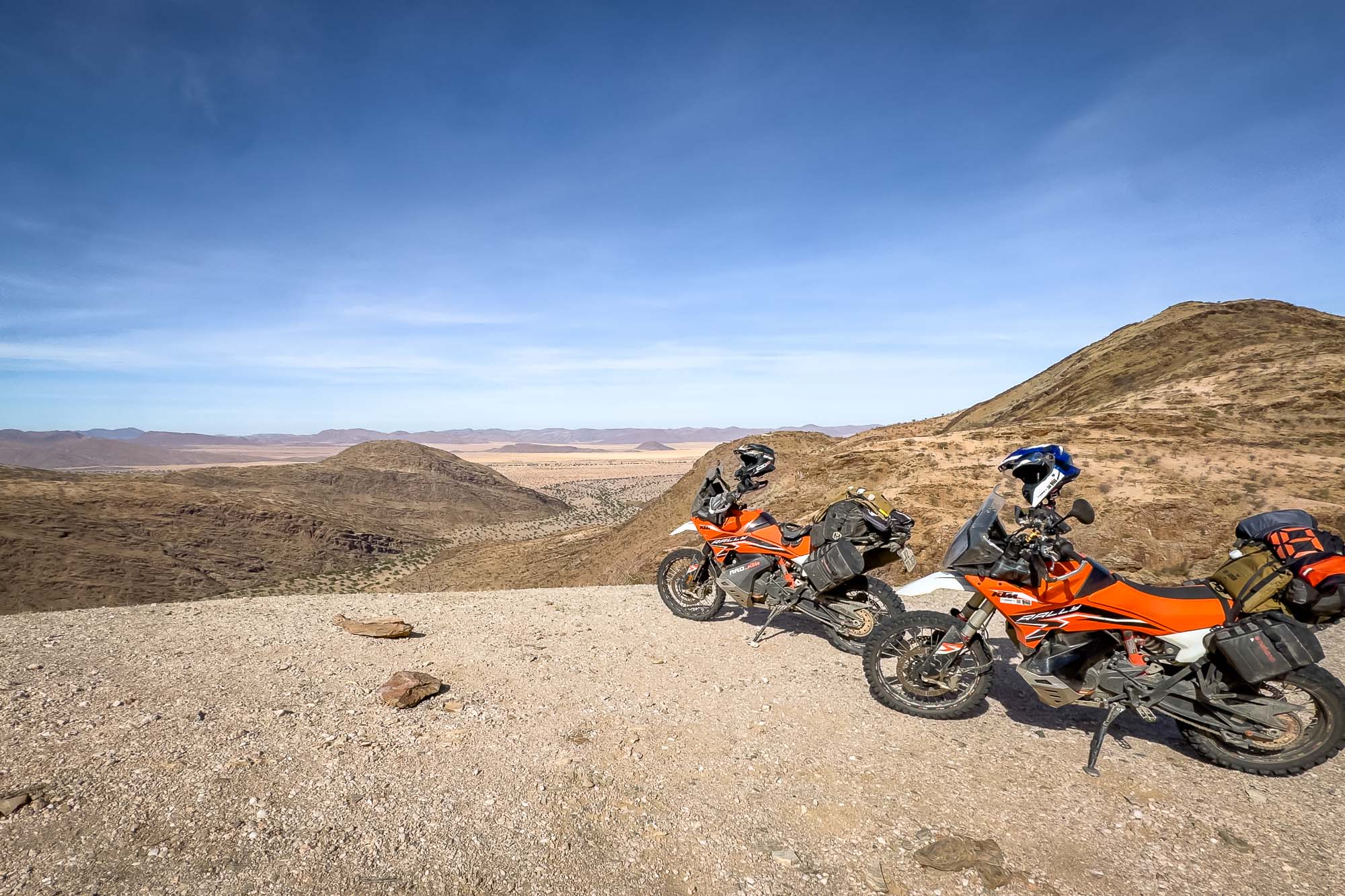
Day 8 – Fuel and Perspective
After the previous day’s battle through Van Zyl’s Pass and Joubert’s Pass, simply riding in fourth and fifth gear again felt like a luxury. Bodies were stiff, knees sore and the accumulated fatigue of the previous days still very much present, but the mood had changed. The major challenge was behind us, and we could finally allow ourselves to absorb the vastness of Kaokoland.
The morning started with more sand and rocks, as if Namibia wanted one final reminder that easy kilometres are earned in this part of the world. Fortunately, the D3702 eventually brought relief, and the motorcycles settled into a more comfortable rhythm. Fuel consumption improved, and for the first time in days, we found ourselves simply enjoying the ride rather than focusing on the next obstacle.
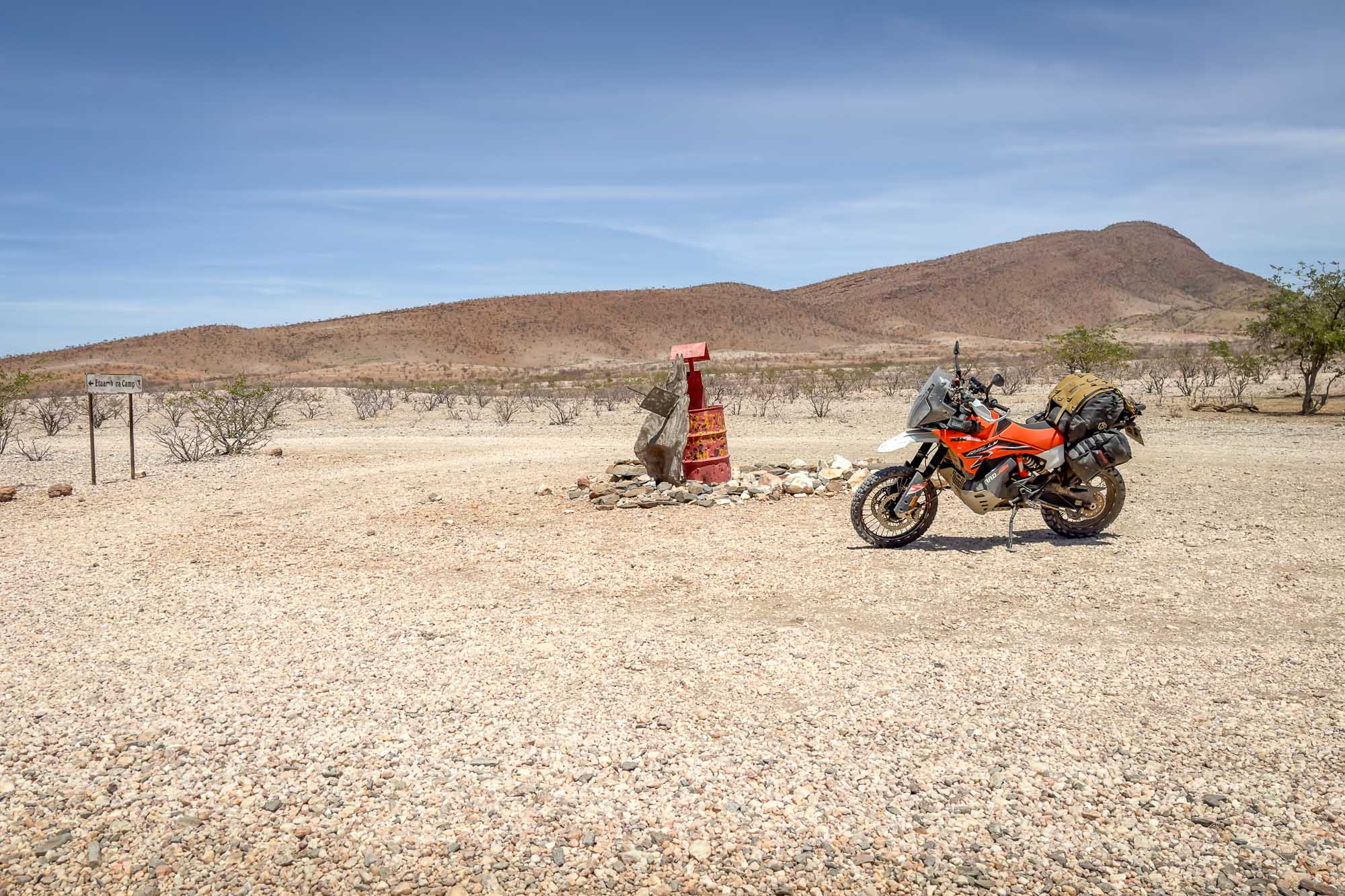
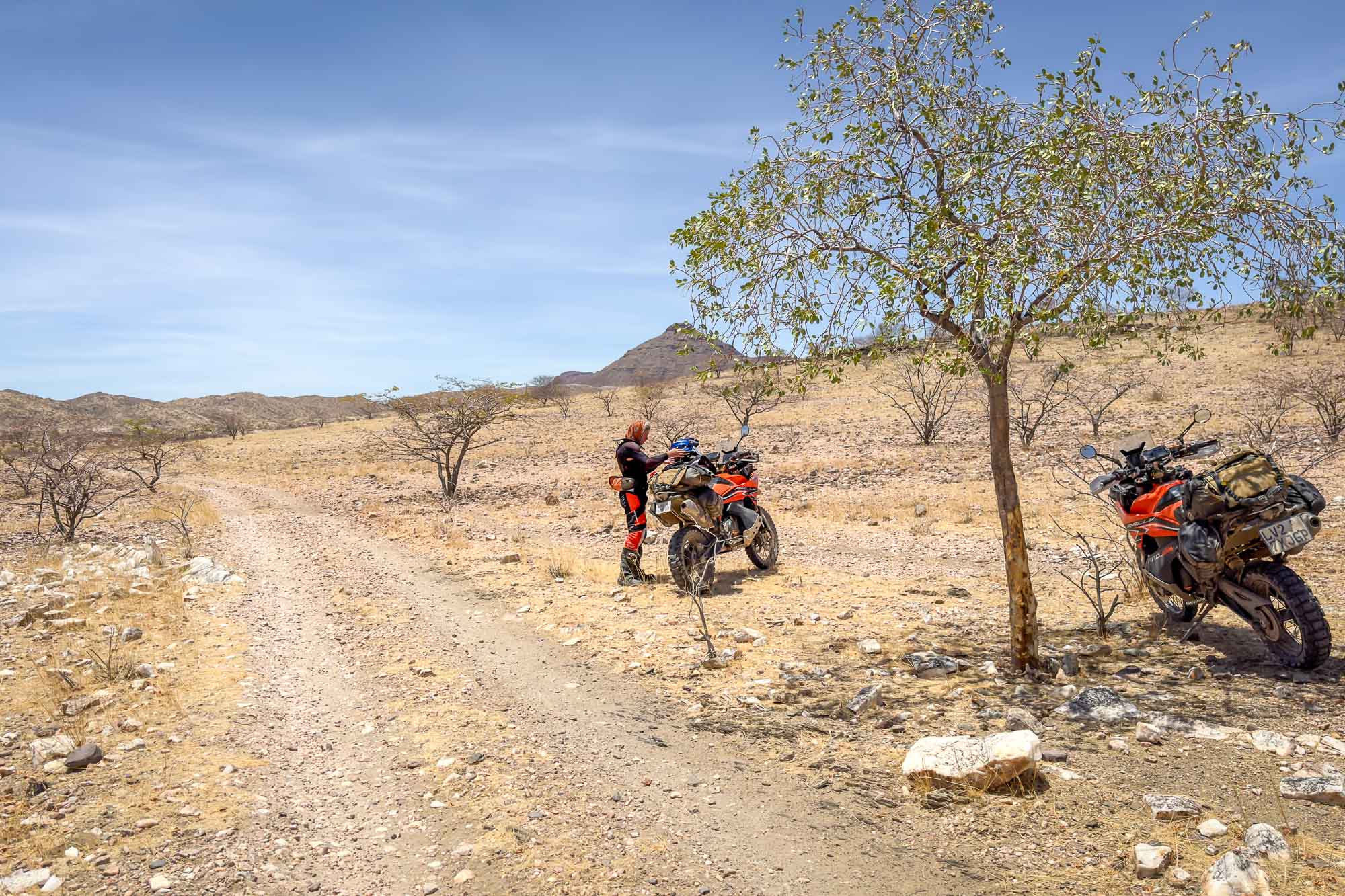
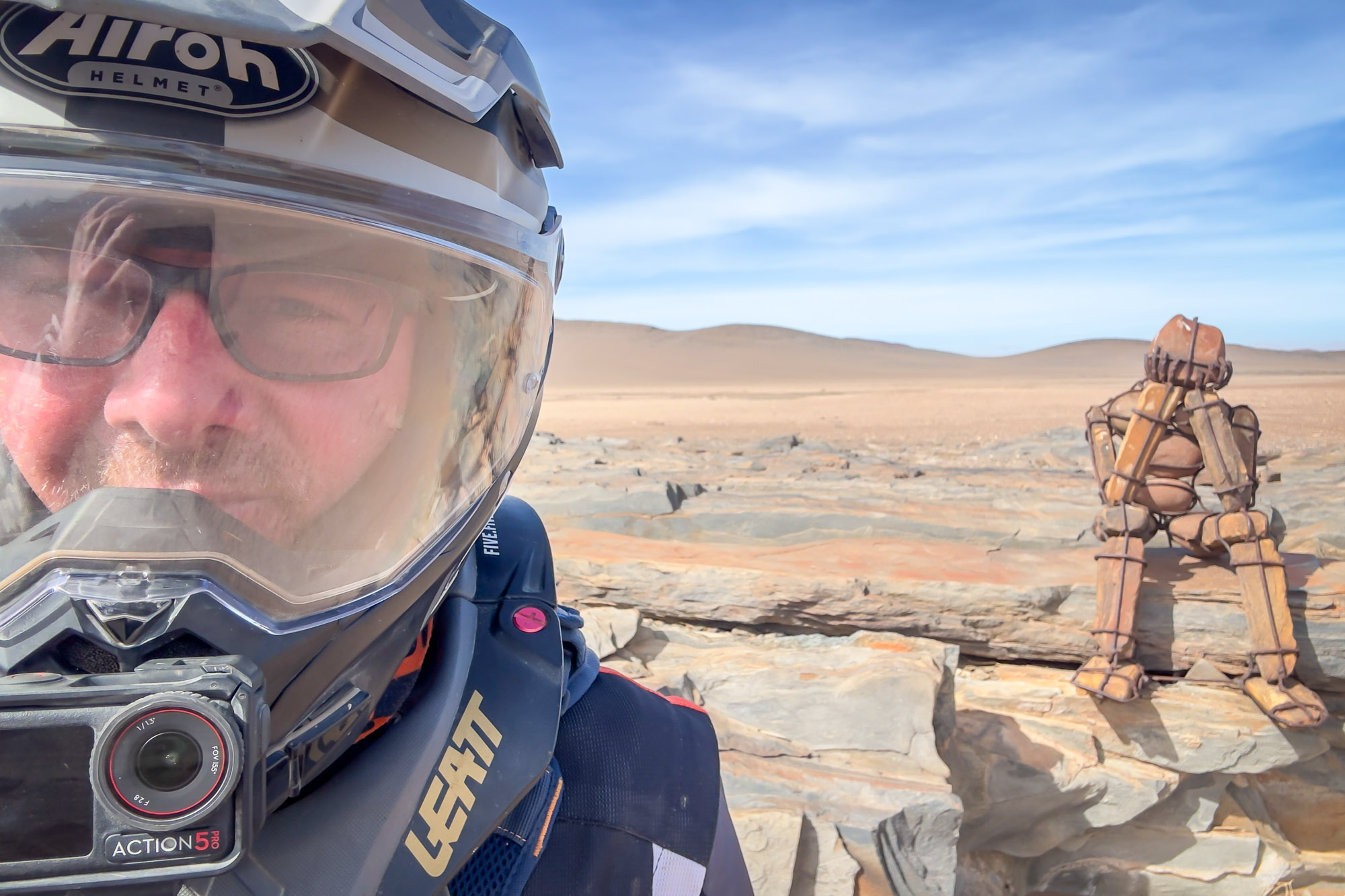
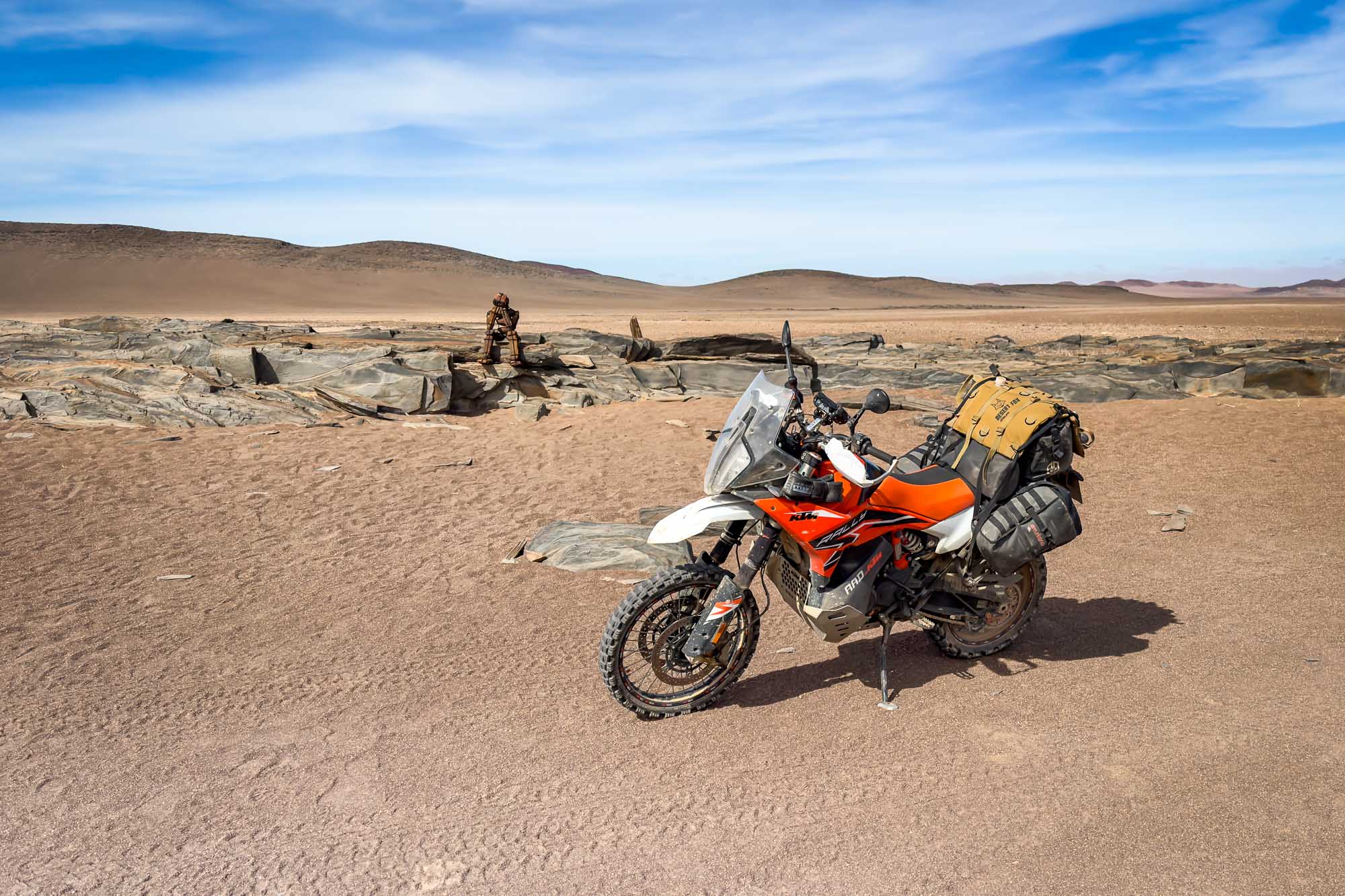
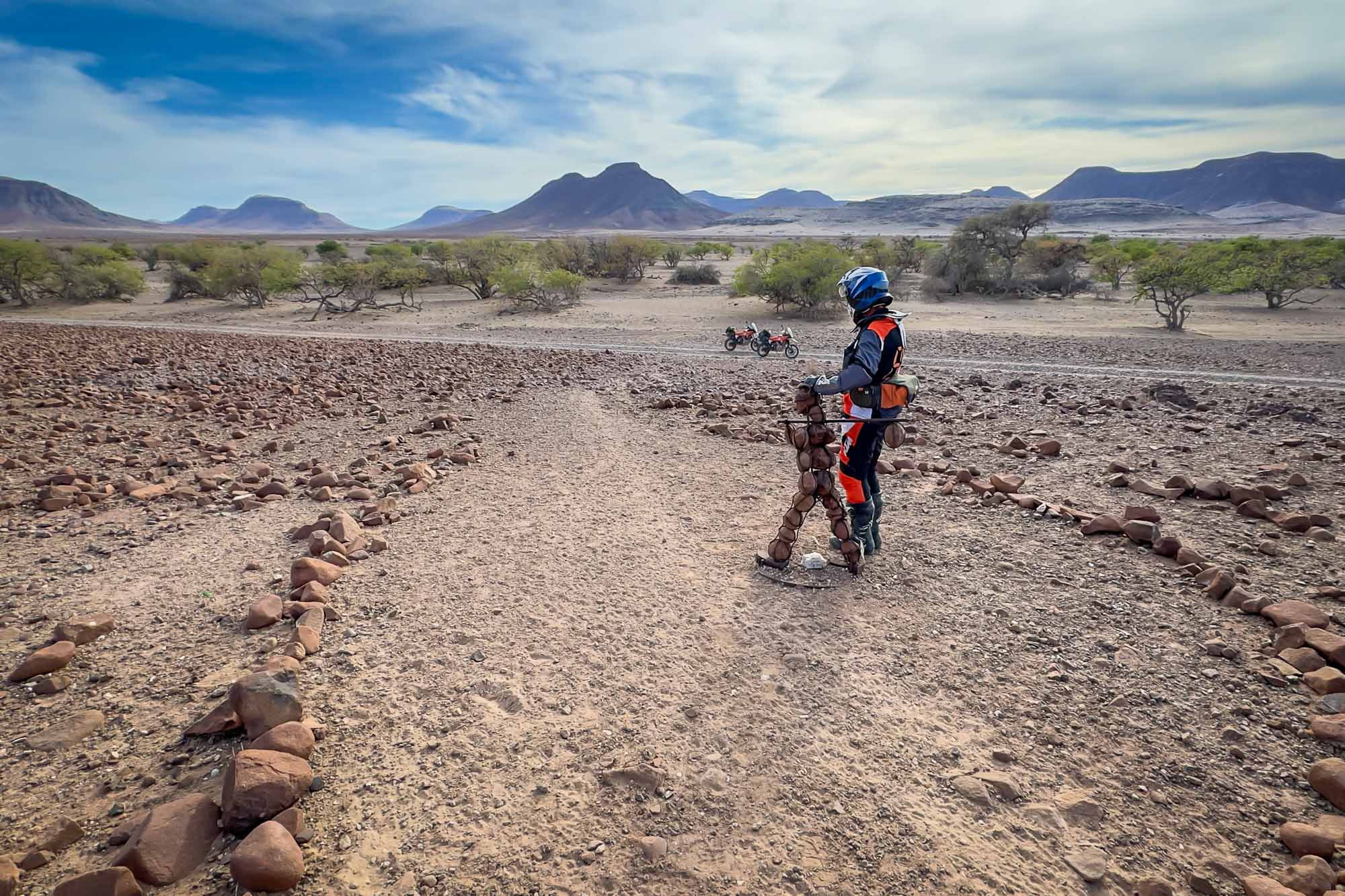
And what a landscape it was! Wide plains stretched towards distant mountains, grasslands met desert sand, and the endless horizons made us appreciate just how remote this corner of Namibia truly is. Along the way we came across several stone mannetjies standing silently in the wilderness, their origin unknown but somehow perfectly at home in the landscape.
Fuel, however, remained the theme of the day. Puros provided relief, while Sesfontein delivered uncertainty when the pumps stood dry. Eventually, with a little help from the locals and a measure of patience, we secured enough fuel to continue south.
By the time Palmwag appeared on the horizon, one motorcycle had barely sixty kilometres of range remaining. It was a small reminder that in remote places, plans often take second place to circumstances. After days of dust, heat and hard riding, Palmwag Lodge offered something equally valuable — a hot shower, a proper meal and a comfortable bed. Luxury is a relative thing, and that evening it felt absolutely wonderful.
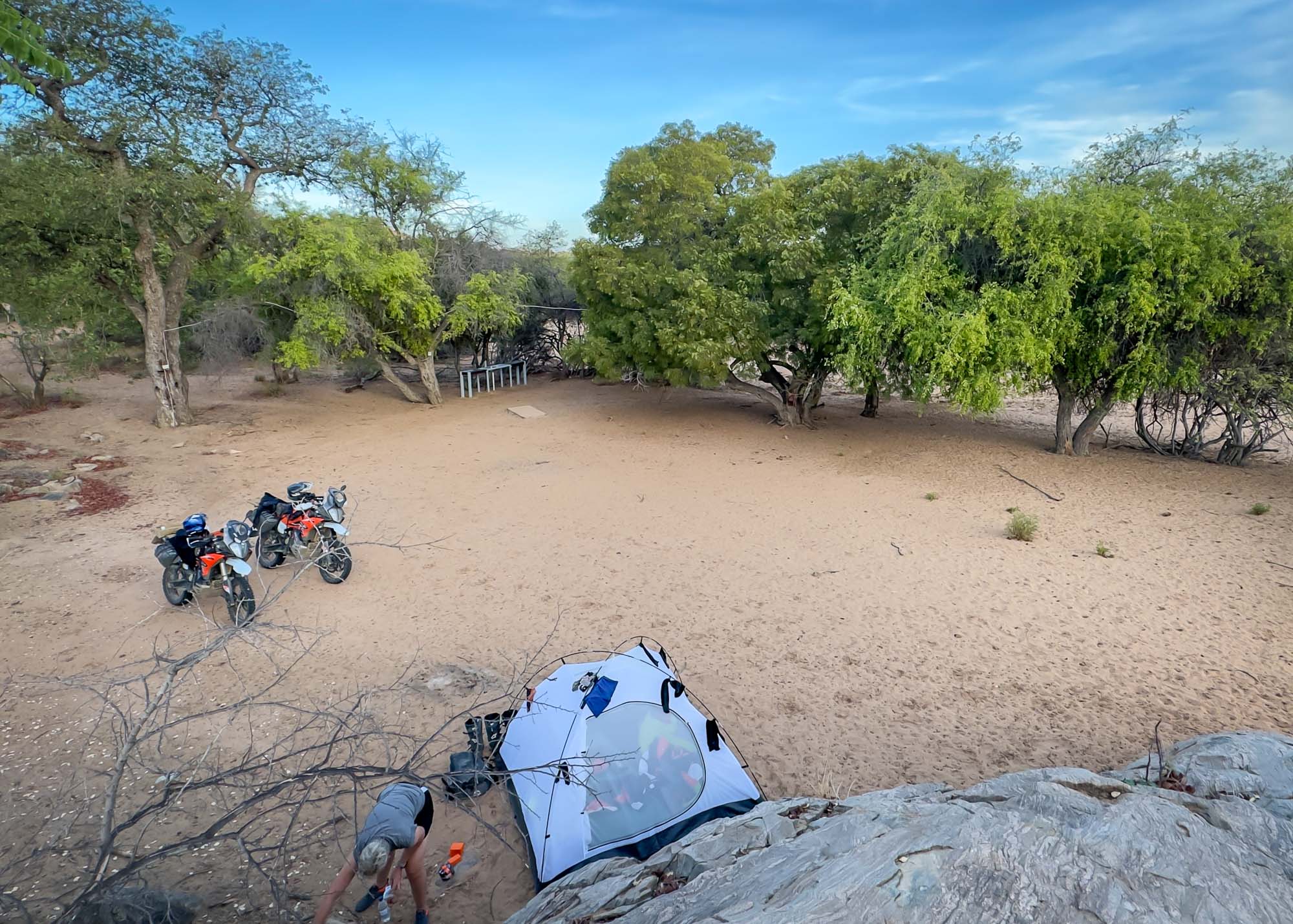
Day 9 – Learning to Slow Down
Palmwag marked a change in tempo. The objectives we had dreamed about for years were behind us. Van Zyl’s Pass, the Marienfluss and Joubert’s Pass had become memories rather than challenges still waiting ahead of them. For the first time since leaving Windhoek, there was no pressure to reach somewhere or to prove anything.
We allowed ourselves a slow breakfast and deliberately chose the easier roads toward Brandberg. Recent rains had transformed the landscape and provided beautiful contrasts between green plains, dark mountains and dramatic skies. Corrugations remained part of the journey, but after Kaokoland they felt almost insignificant.
A brief stop near Twyfelfontein and the Burnt Mountain provided an opportunity to stretch our legs and enjoy something cold before continuing south. Eventually, a different D-road tempted us away from the main route, and soon enough we found ourselves back on two-spoor tracks, following a riverbed toward Brandberg White Lady Lodge.
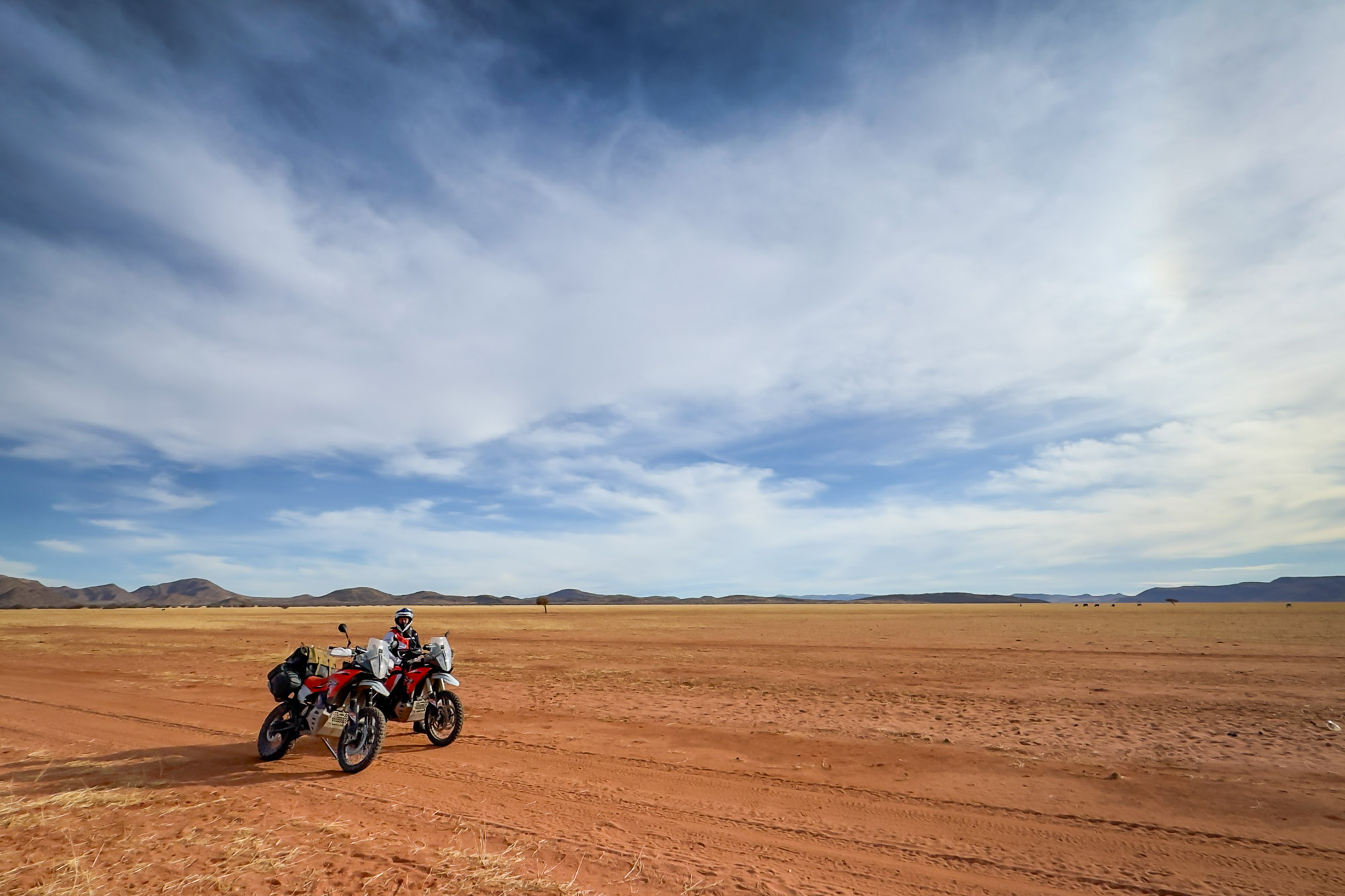
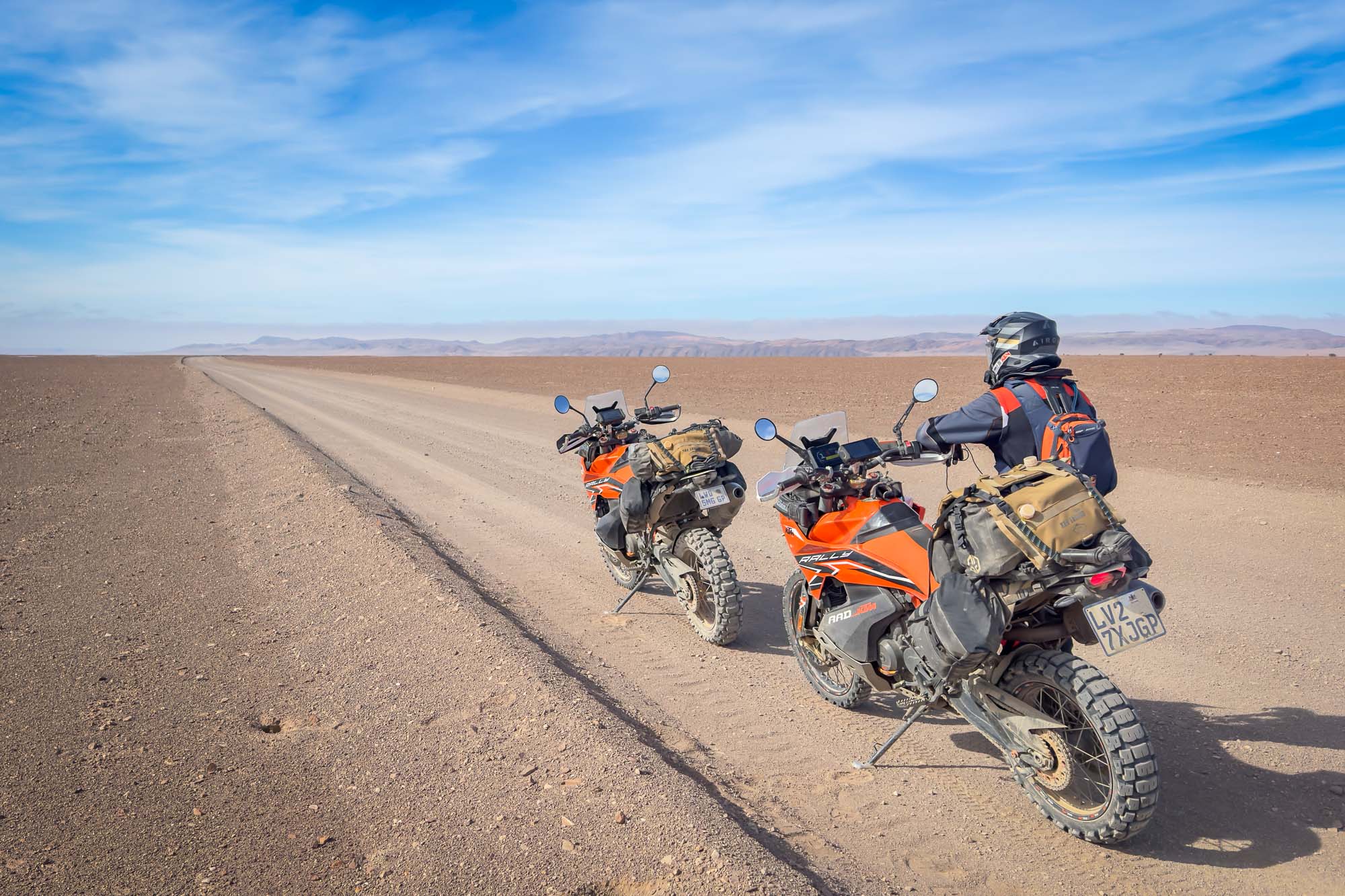
Neither of us had much appetite for more sand and rocks, but the scenery more than compensated. With Brandberg rising ahead of us and the late afternoon sun softening the landscape, the final kilometres passed easily. White Lady Lodge proved to be the perfect place to slow down. The rustic tents, a proper shower and a relaxed evening around good food reminded us that recovery is also part of adventure.
Looking back, we realised that while difficult roads create memories, it is often the quieter moments in between that give a journey its meaning. Tomorrow, we will make our way to a place that has always held a special place in our hearts — Spitzkoppe.
Day 10 – Returning to Spitzkoppe
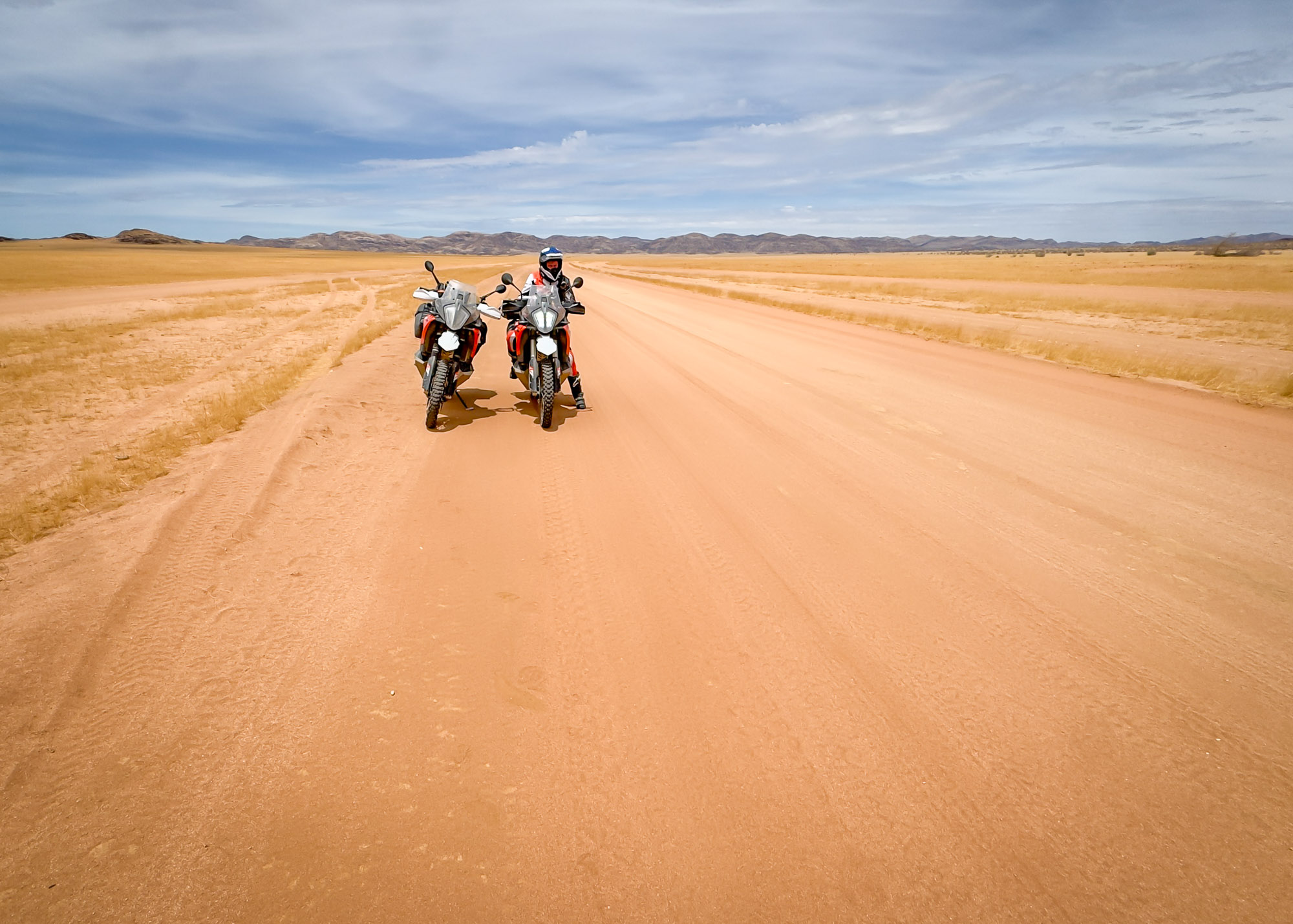
After two days of rest at Brandberg White Lady Lodge, we were ready for the short ride south to Spitzkoppe. Since our first overlanding journey in 2017, the granite peaks have held a special place in our hearts. There is something about Spitzkoppe that brings calm. It is a place that reminds you how small you are in the grand scheme of things, while at the same time allowing you to appreciate the raw beauty that Namibia offers so effortlessly.
Recent rains had transformed the landscape yet again. Green grass stood in contrast to the ancient granite formations, and under overcast skies the ride south unfolded at an easy pace. Even after our rest days, the accumulated fatigue of Kaokoland was still present. We had reached the point where concentration in technical sections required effort and where the body quietly reminded us of the previous weeks.
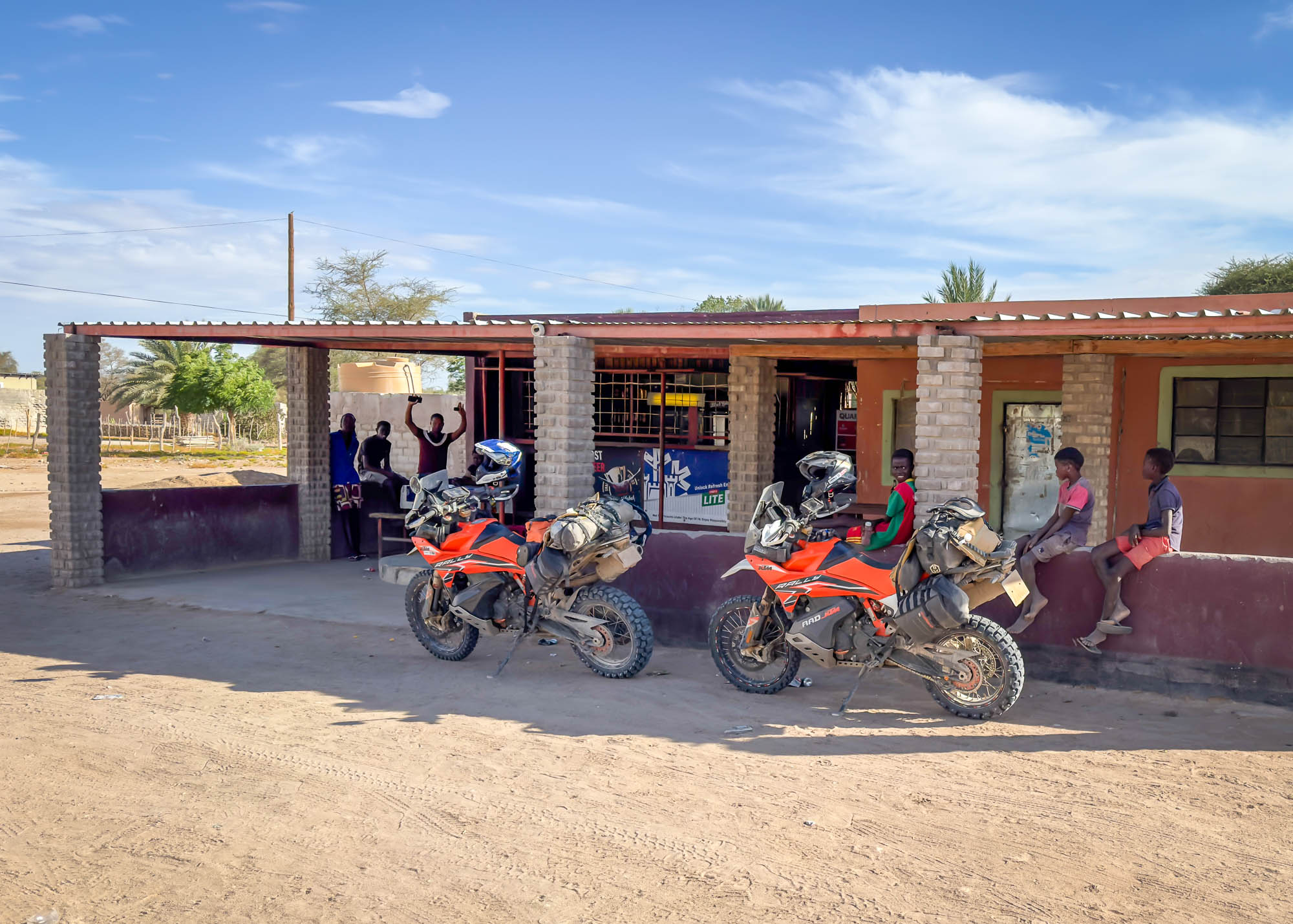
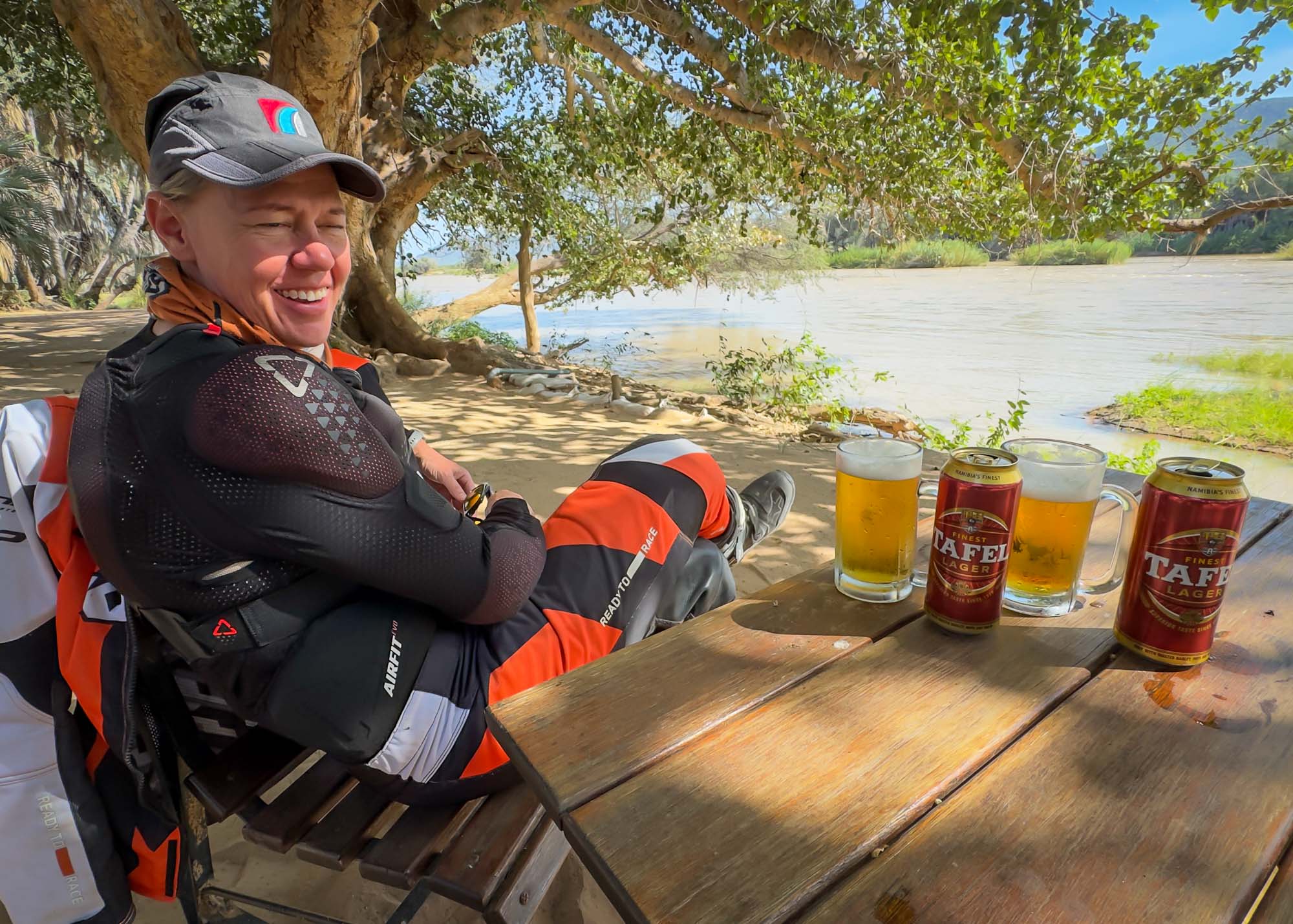
By late morning we arrived at Spitzkoppe, but rather than immediately searching for a campsite, we headed for the community restaurant and enjoyed a few cold beers while reflecting on the roads already travelled. There was an unspoken realisation between us that the journey was slowly drawing to an end.
Later that afternoon, once the worst of the heat had passed, we ventured towards the southern side of the reserve. A few kilometres beyond the old graveyard, we found exactly what we were looking for — a quiet campsite with spectacular views and complete solitude.
The remainder of the afternoon was spent wandering among the granite formations with cameras in hand, enjoying the scenery and taking in every last moment. As darkness settled over the mountains, we prepared supper and sat quietly beneath the stars.
With Spitzkoppe casting its shadow over camp, it felt like the perfect ending to an unforgettable adventure. Tomorrow we would return to Windhoek.
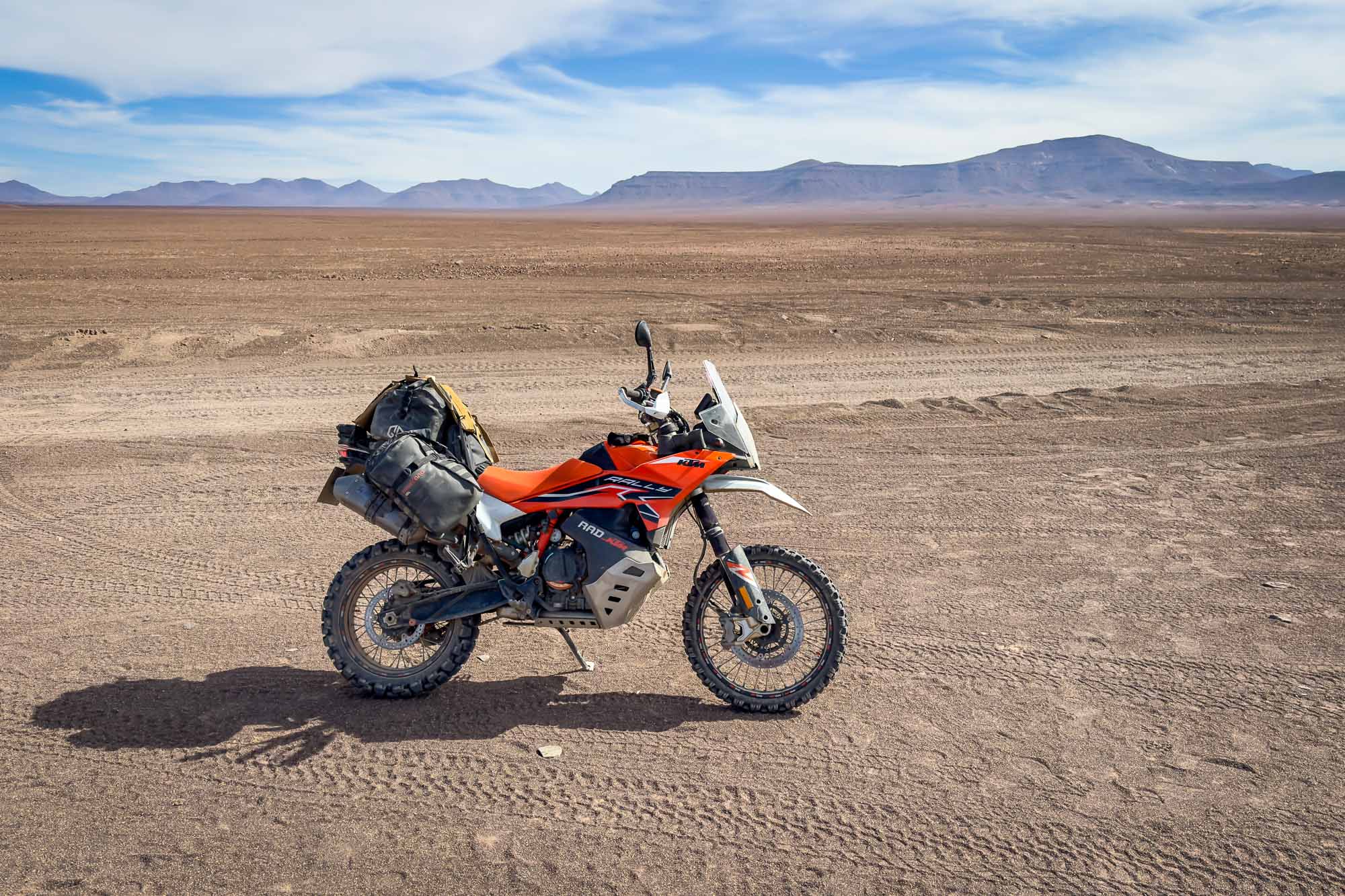
Day 11 – Closing the Chapter
It does not happen often, but we allowed ourselves the luxury of sleeping until 07:30. A light shower during the night had left the tent damp, and there was no urgency. Coffee was made, and, unusually for us, very little was said.
Part of us wanted another day on the road, another campfire, another destination, another sunrise somewhere in Namibia. The other part looked forward to Windhoek and the comfort of a proper bed. If we are honest, the greater part wanted to stay and continue riding.
Eventually camp came down for the last time, and we headed towards Windhoek. The final gravel roads, which only days before would have demanded our full attention, now felt almost effortless. Somewhere during the previous two weeks, without really noticing, we had adapted.
Halfway to Windhoek, a padstal and some Geelveld biltong provided one last excuse to delay the inevitable. Eventually, though, the city appeared on the horizon. Back at the lodge, we loaded the motorcycles and spent the afternoon resting before sharing dinner with Petra, who had faithfully watched over our vehicle while we explored Namibia.
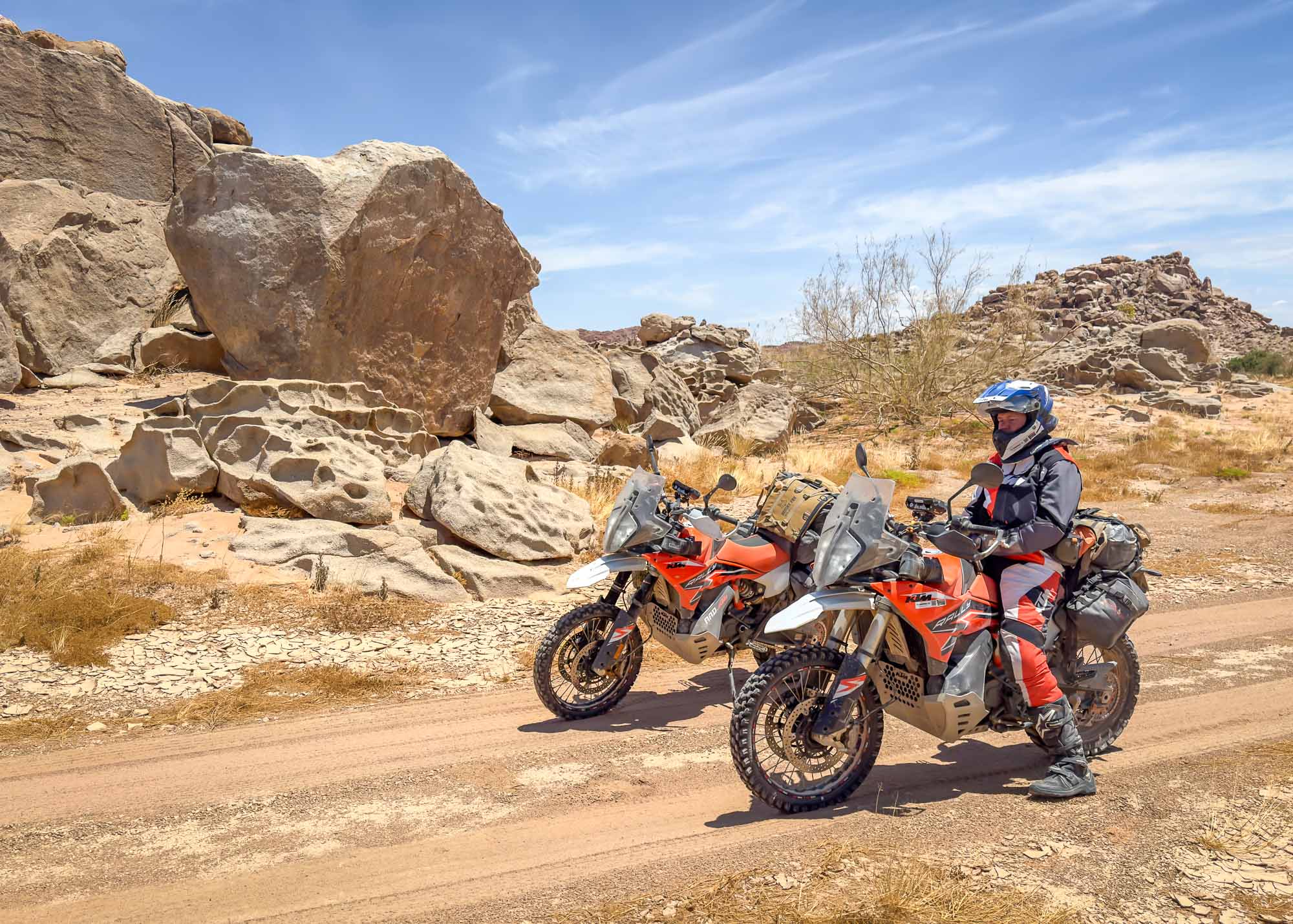
Heading home felt good, but it also marked the closing of a chapter. Looking back, we realised that the journey had become far more than a New Year’s trip through Namibia. Together, we had reached what we considered the pinnacle of adventure riding — completing Van Zyl’s Pass, Marienfluss and Joubert’s Pass unsupported on heavily loaded motorcycles.
Yet the greatest reward was never the passes, the photographs or the kilometres; it was sharing the experience together. Because one day the dust is washed off the bikes, the gear is packed away and life returns to normal, but some roads remain with you and long after the journey ends, they quietly begin calling you back.
The next chapter is already loading – mid-2026 awaits.
Packing for the Unknown
Adventure riding has a way of exposing poor decisions. Carry too much and the bike becomes difficult to manage. Carry too little and you quickly discover what you left behind. The challenge is finding the balance between comfort and self-sufficiency, especially when the route ahead is measured in days rather than kilometres.
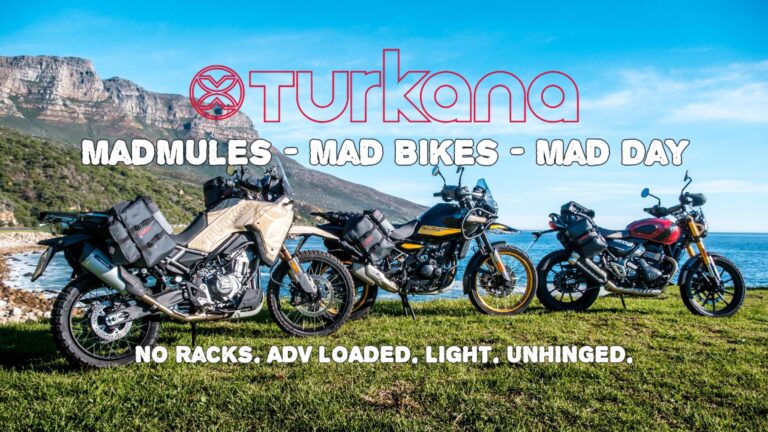
For this journey, simplicity became the guiding principle. Both KTM 890 Rallys were fitted with Turkana Gear’s MadMules rackless system. The bulk of our equipment was carried in a pair of 15-litre Turkana bags mounted to the MadMules, while separate 5-litre bags housed the technical essentials. Two 20-litre duffel bags completed the luggage setup and carried our camping equipment, clothing and personal items.
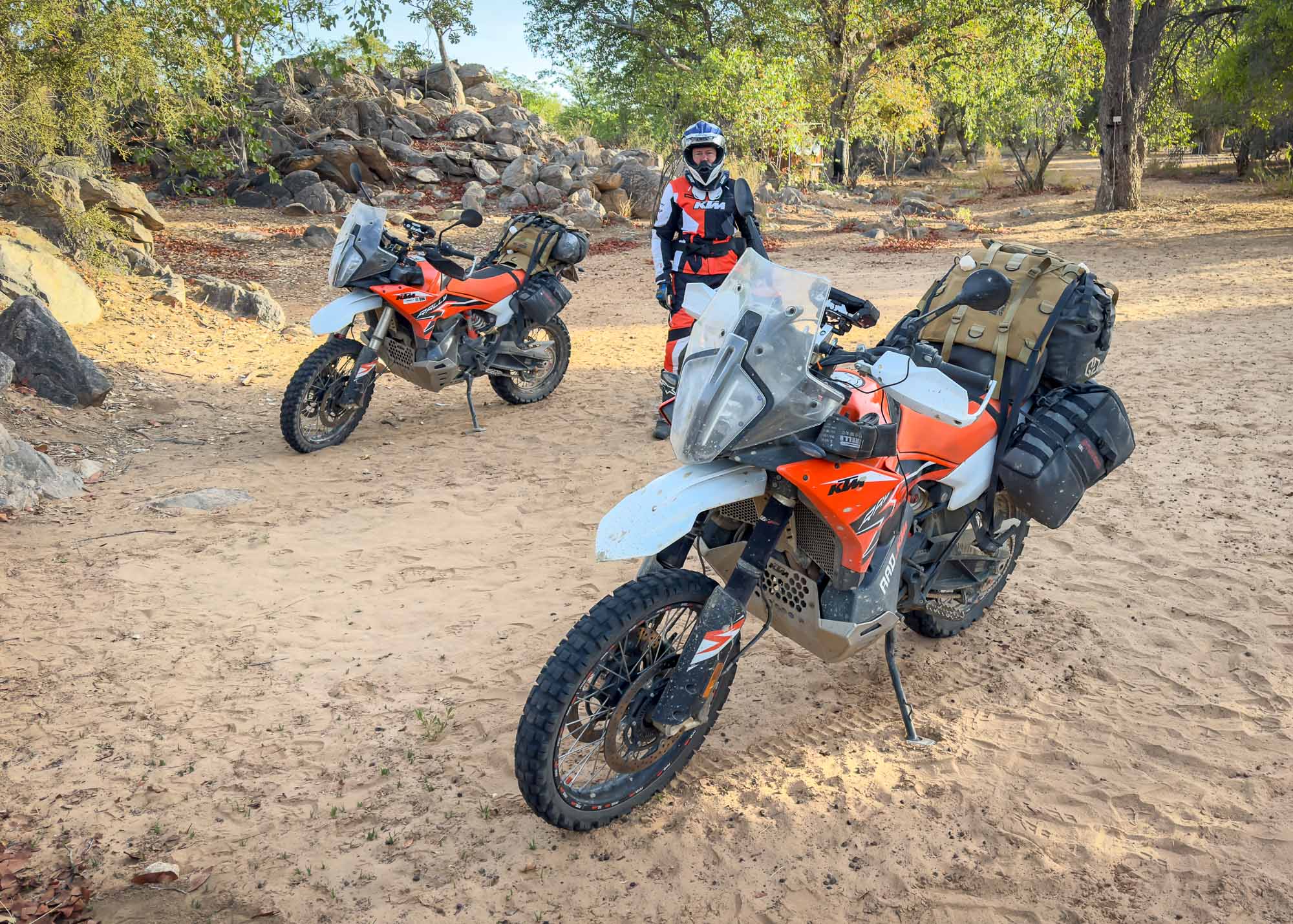
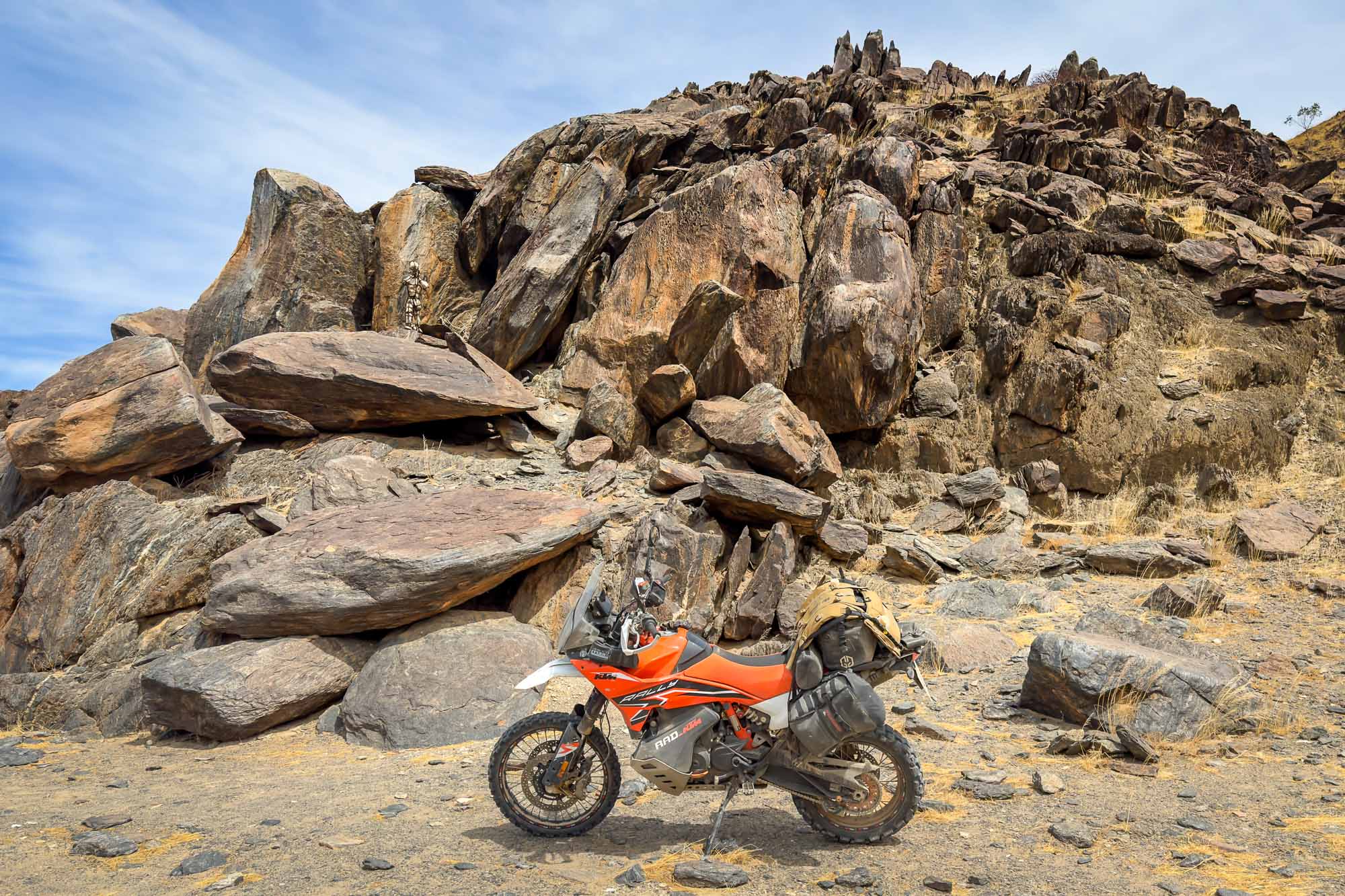
The arrangement allowed us to separate living necessities from technical necessities — a small detail that proved invaluable as the days unfolded. Clothing was intentionally kept simple. A few changes of clothes, base layers, rain gear and camp shoes were all that made the cut. Space was reserved for the things that mattered most: water, food and tools.
The technical bags carried everything needed to keep the motorcycles moving — tubes, tyre levers, pumps, a chain breaker, spare bolts, filters, oils and a carefully assembled tool roll. Nothing excessive, just the essentials built up over years of riding and travelling across Southern Africa. They also housed those items you hope never to use but are grateful to have when the unexpected happens.

Food was basic and functional. Coffee, gas cartridges, ration packs and enough supplies to remain self-sufficient when the nearest town or campsite was still many hours away. Water, however, received special attention. In Kaokoland, fuel can usually be found eventually. Water is not always guaranteed.
Over eleven days, thousands of kilometres, endless corrugations, sand, rocks, river crossings and temperatures ranging from cool mornings to 46°C afternoons, the luggage simply did its job.
No shifting loads, no broken straps, no drama. Perhaps that is the greatest compliment one can give adventure equipment. By the end of the trip, the Turkana Gear bags had become part of the motorcycles themselves — quietly carrying our lives across some of Southern Africa’s most demanding terrain while allowing us to focus on what really mattered.
The journey ahead.
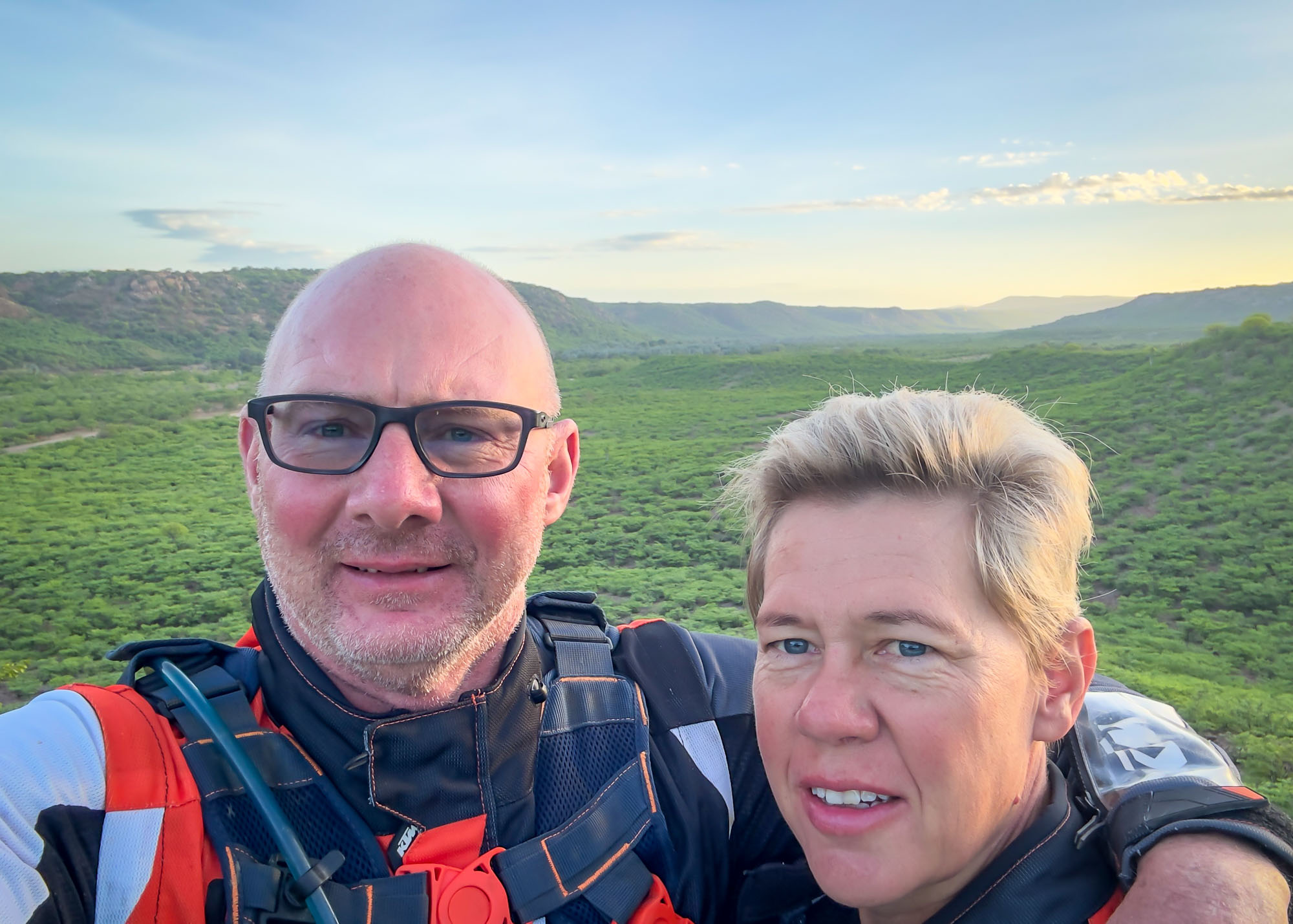
About the Authors
With a lifelong connection to nature and the outdoors, I have spent many years exploring Southern Africa, sometimes by 4×4, but predominantly by motorcycle. Through Wild & Moto Media, these journeys have found expression in stories and photographs that seek to capture not only the places themselves but also the emotions and experiences that come with travelling through them.
My journey began behind the lens as a freelance sports photographer, and I still return to that world whenever the opportunity arises. Motorcycles, however, have become far more than a subject to photograph. They have become a way of exploring landscapes, meeting people and experiencing the quieter side of adventure.
Together with Ezelda, we continue to explore Southern Africa in various forms of overlanding. Ezelda, who represented South Africa at the International GS Trophy in Mongolia in 2018, is a phenomenal rider and adventurer in her own right, whether behind the wheel of a 4×4 or in the saddle of a motorcycle. Over the years, we have shared countless journeys, believing that adventure is not measured by distance travelled, but by the experiences shared and the stories that remain long after the dust has settled.
Nature remains our refuge, while motorcycles provide the means to reach places where the ordinary gives way to something more meaningful. The camera has become a companion rather than the destination — a way of preserving the moments found between the dust, the light and the uncertainty that accompany every journey.
Wild & Moto Media is simply the expression of that journey.
– Callie & Ezelda
Copyright ©WildMotoMedia. All photographs, text and content featured in this article remain the property of the authors unless otherwise stated. No part of this publication may be copied, reproduced, distributed or used in any form without prior written permission from the copyright owners.



Thanks for sharing Callie and Ezelda . A well written and engaging article that makes one want to take on the challenge .